
LIMA, Ohio (WLIO) - Well after our weekend winter storm dropped 7 to 11 inches of snow across west-central Ohio, the ferocious cold and wind chills have been the focus. Let's go inside where it's warm and talk about what makes those wind chills so dangerous.
On a cold winter night, the heat from our body attempts to warm up the frigid air surrounding us through a process called convection. This is where warm air rises and cold air sinks. Let's take a 20-degree temperature with no wind. Since the wind is calm, our small insulating layer or bubble around our body is not disrupted nor pushed away. While still cold, the wind chill is the same as the air temperature at 20 degrees.
Things get dangerous when a wind element is introduced. Taking the same air temperature at 20 degrees, let's throw in a 20-mph sustained wind. That strong wind will now break up and push away our small insulating warm layer around our body. This accelerates body heat loss, producing a wind chill or feels like 4 degrees. This is where frostbite becomes a concern.

And if you are outside exposed for a prolonged period of time, this is where hypothermia, or a dangerously low body temperature colder than 95 degrees, may develop. Signs and symptoms of hypothermia include confusion or memory loss, shivering, difficulty speaking, very low energy or sleepiness, stiff muscles and even loss of consciousness. Left untreated, hypothermia can be deadly, so emergency medical intervention is required.
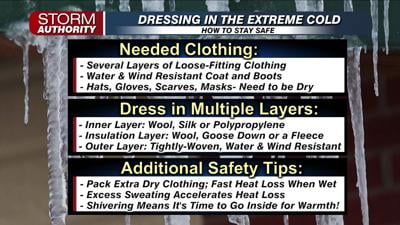
Now, if you must go outside, there are some tips to keep you warm and safe. Dress in several layers of loose-fitting clothing, along with a water and wind resistant coat and pair of boots. Don't forget the hats, gloves, scarves, and masks. Make sure they are dry. Dressing in multiple layers, including an inner, insulation and outer layer, will also be your friend. An inner layer should be composed of wool, silk or polypropylene. The best insulation layer consists of wool, goose down or a fleece, and the outer layer should be tightly woven, water and wind resistant. Make sure you pack extra dry clothing and limit excess sweating as wet clothes and sweating accelerate heat loss. Finally, if you start to shiver, it's time to go inside to get warm.
And with many days ahead of subzero temperatures and wind chills, it's very important that you take these steps to help you stay safe.



