

COLUMBUS, OH (NATIONWIDE CHILDREN'S HOSPITAL) - Spina bifida is a birth defect that occurs in one out of every two thousand births.

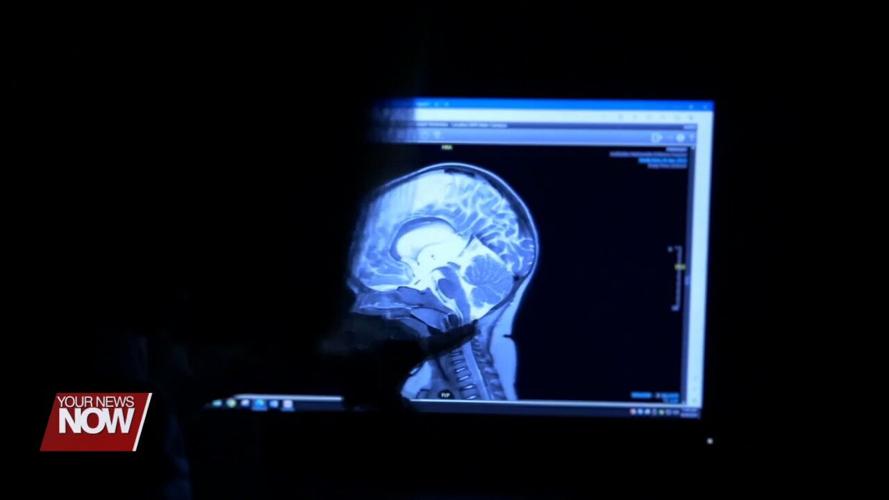
Some children will eventually need a walker or a wheelchair. But early intervention through fetal surgery is changing the trajectory for affected children by reducing the severity of symptoms and improving long-term outcomes. More than a year after the procedure, the Badenhop family is experiencing all the positive impacts of their decision to undergo fetal surgery at Nationwide Children’s Hospital. Cameras captured the moment baby Lexi underwent her first MRI after fetal surgery for spina bifida.
“It just feels like yesterday that we got the diagnosis; we didn't know what was going to happen," said Brittany Badenhop, Lexi's mom.
Spina bifida is a congenital condition where the baby’s spine doesn’t develop properly in the womb. But fetal surgery offers a chance to repair the spine before birth.

“Coming to Nationwide, putting trust into strangers was difficult. We looked at their experience, and we realized very quickly this is a very intelligent, very wise set of doctors," Badenhop added.
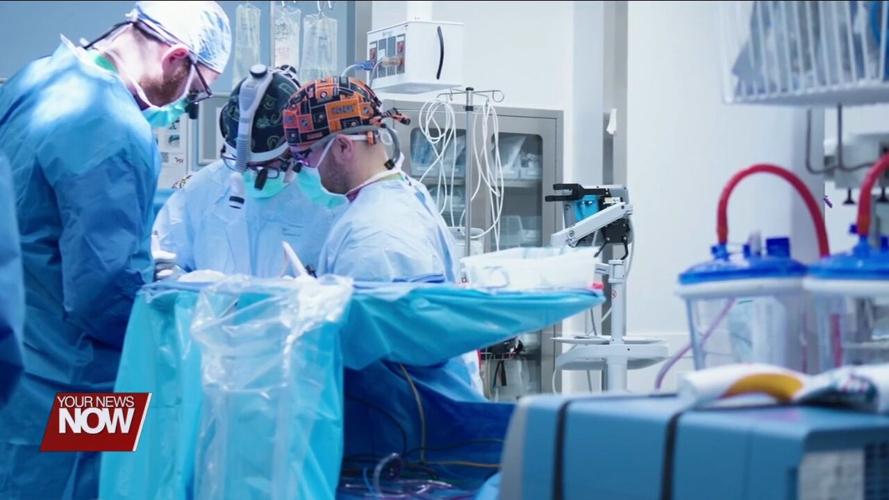
A year ago, through a delicate procedure, the fetal experts at Nationwide Children’s Hospital made a small opening in Brittany’s uterus, accessing baby Lexi and closing her spina bifida defect.
“Our team performed surgery at 25 weeks to mitigate the potential complications of spinal fluid and improve the long-term outcome. Brittany was able to carry the baby to term; she had a scheduled c-section at 37 weeks with no complications," said Adolfo Etchegaray, MD, at Nationwide Children's Hospital.

“It's clear that fetuses who have their defects closed before birth are twice as likely to walk without support," explained Oluyinka Olutoye, MD, PhD, Nationwide Children's Hospital.
Lexi recently returned to Nationwide Children’s for her one-year follow-up, including an MRI to see how her brain looks.
"The cerebral spinal fluid flows freely around the spine—everything looks great," commented Badenhop.
That’s because there’s no fluid buildup on her brain, indicating the surgery continues to be a success.
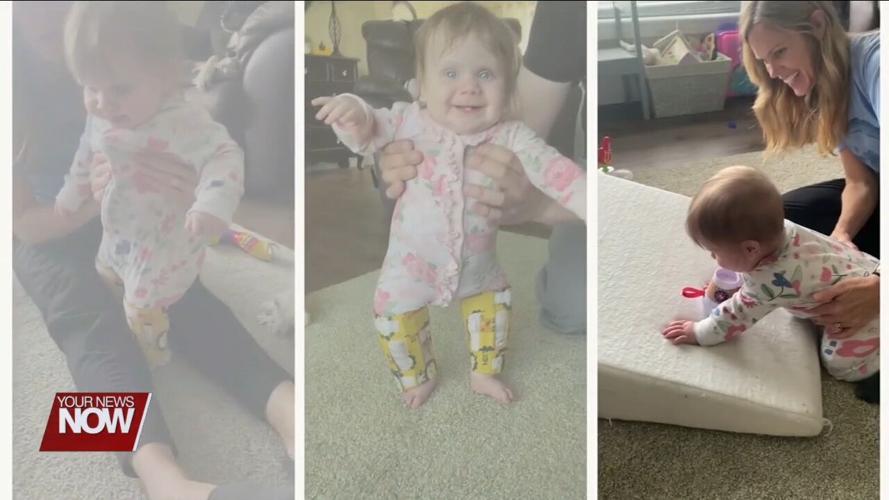
"The parents are doing a tremendous job in ensuring that she is meeting all of her developmental milestones,” said Jeffrey Leonard, MD, Nationwide Children's Hospital. "She's not quite walking independently, but I expect that to happen within the next six months."
"To look at Lexi, you would never suspect that there's something different about her. Unless you saw the little scar on her back," said Badenhop. "If we had not gone through with surgery, we would be having a very different conversation today. Everything she does is a step in the right direction. She is such a good example of the benefits of fetal surgery."
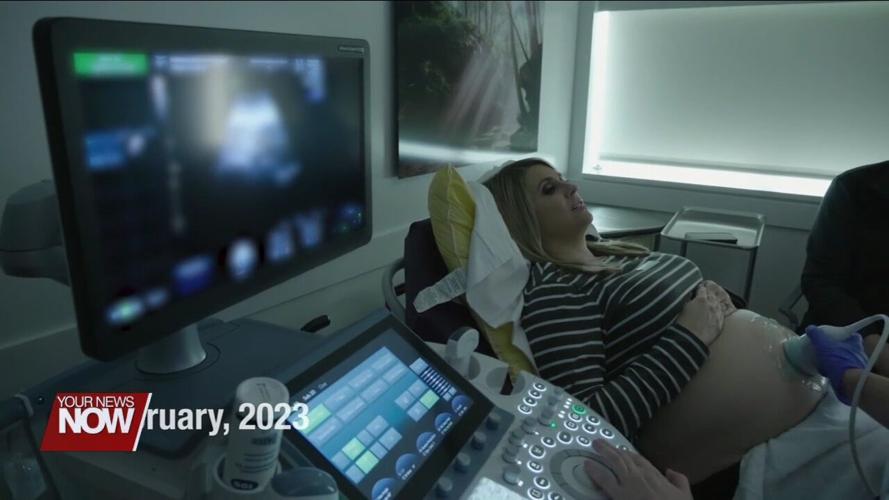
Article written by Nationwide Children's Hospital: (COLUMBUS, Ohio) – During her 20-week ultrasound appointment, Brittany Badenhop learned her baby had spina bifida, a birth defect that occurs during the development of the central nervous system very early on in pregnancy. Spina bifida affects one out of every 2,000 births in the United States each year, and some children diagnosed will need to use a walker or a wheelchair their entire life. However, more than a year after surgery at the Fetal Center at Nationwide Children’s Hospital to repair their baby’s spina bifida in the womb, the Badenhop family is celebrating Lexi’s progress as she turns one.
“To look at Lexi, you would never suspect that there's something different about her,” said Brittany Badenhop. “You would never suspect that she is a child with spina bifida unless you saw the little scar on her back. She looks like a typical child who is the happiest baby you've ever seen, smiling, laughing, having fun with her sister.”
Brittany’s clinical team of experts at Nationwide Children’s Fetal Center said initial tests showed that she was a perfect candidate to undergo fetal surgery. Early intervention is changing the trajectory for children with spina bifida by reducing the severity of symptoms and improving long-term outcomes.
“In the past, women who needed fetal surgery had to go out of the area to get care,” says Oluyinka Olutoye, MD, PhD, fetal surgeon and surgeon-in-chief at Nationwide Children’s Hospital. “Now, we can provide that service and care for them right here at Nationwide Children’s.”
More than a year ago, the fetal experts at Nationwide Children’s Hospital made a small opening in Brittany’s uterus, accessing baby Lexi and successfully closing her spina bifida defect. This procedure was the first fetal surgery through the hospital’s Fetal Center, led by a team of experts with decades of experience in fetal medicine and fetal surgery.
“Our team performed surgery at 25 weeks to mitigate the potential complications of spina bifida and improve the long-term outcome,” said Adolfo Etchegaray, MD, chief of fetal medicine at Nationwide Children’s Hospital. “Brittany was able to carry the baby to term. She had a scheduled C-section at 37 weeks with no complications.”
Recently, Lexi returned to Nationwide Children’s for her first MRI post-fetal surgery, marking a critical milestone in her development. The fetal team was extremely happy to see no fluid build-up on Lexi’s brain while reviewing her MRI, indicating the surgery continues to be a success.
“She's doing great,” said Jeffrey Leonard, MD, chief of neurosurgery at Nationwide Children’s Hospital. “She’s functionally standing and she's wearing braces, has not had a shunt, which is critical to this. We're watching bigger ventricles than usual, but there's been no signs of elevated pressure and she's continuing to develop well, so I'm very pleased with where she is at this point.”
Dr. Leonard said Lexi is not quite walking on her own yet, but he expects her to hit that milestone within the next few months. The fetal team also said Brittany and her husband, Jared, are doing a tremendous job ensuring Lexi is meeting her developmental milestones. Brittany said she cannot imagine where Lexi would be today if she hadn’t undergone fetal surgery.
“Everything she does every day is a step in the right direction,” said Brittany. “Her fine motor skills are wonderful and she's kind of learning how to use those. And she works hard at it. She works hard at physical therapy. It's been a great experience for our family, and we're so hopeful for what she's going to do in the future.”
Nationwide Children’s is one of only a few fetal centers in the Midwest, and across the United States, to offer a full range of fetal therapies including fetal intervention and fetal surgery, to treat conditions such as: cervical teratoma (giant neck mass), congenital diaphragmatic hernia (CDH), congenital lung lesions, fetal heart defect, sacrococcygeal teratoma (SCT), spina bifida and its most severe form, myelomeningocele, and twin-to-twin transfusion syndrome (TTTS).
“We're able to provide the full range of fetal care,” said Dr. Olutoye. “Be it imaging, diagnostics, genetic testing, the counseling, being able to provide the medical therapies that are needed, and also the surgical therapies needed, be it minimal access surgery or open fetal surgery. The entire spectrum of care is what we are prepared to provide here at Nationwide Children's Fetal Center.”
To learn more about Brittany and Lexi’s story, visit: https://bit.ly/3X50uZZ
About Nationwide Children’s Hospital
Named to the Top 10 Honor Roll on U.S. News & World Report’s 2023-24 list of “Best Children’s Hospitals,” Nationwide Children’s Hospital is one of America’s largest not-for-profit free-standing pediatric health care systems providing unique expertise in pediatric population health, behavioral health, genomics and health equity as the next frontiers in pediatric medicine, leading to best outcomes for the health of the whole child. Integrated clinical and research programs, as well as prioritizing quality and safety, are part of what allows Nationwide Children’s to advance its unique model of care. Nationwide Children’s has a staff of more than 14,000 that provides state-of-the-art wellness, preventive and rehabilitative care and diagnostic treatment during more than 1.7 million patient visits annually. As home to the Department of Pediatrics of The Ohio State University College of Medicine, Nationwide Children’s physicians train the next generation of pediatricians and pediatric specialists. The Abigail Wexner Research Institute at Nationwide Children’s Hospital is one of the Top 10 National Institutes of Health-funded free-standing pediatric research facilities. More information is available at NationwideChildrens.org.
