

LIMA, OH (WLIO)-
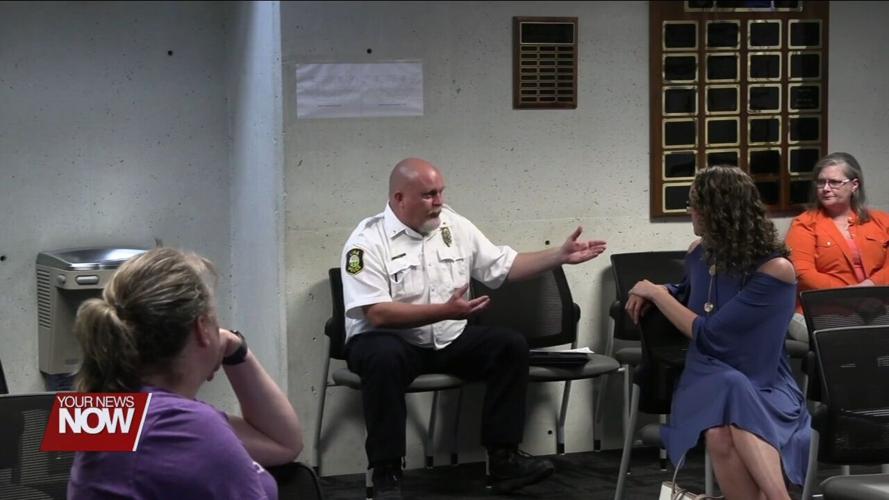
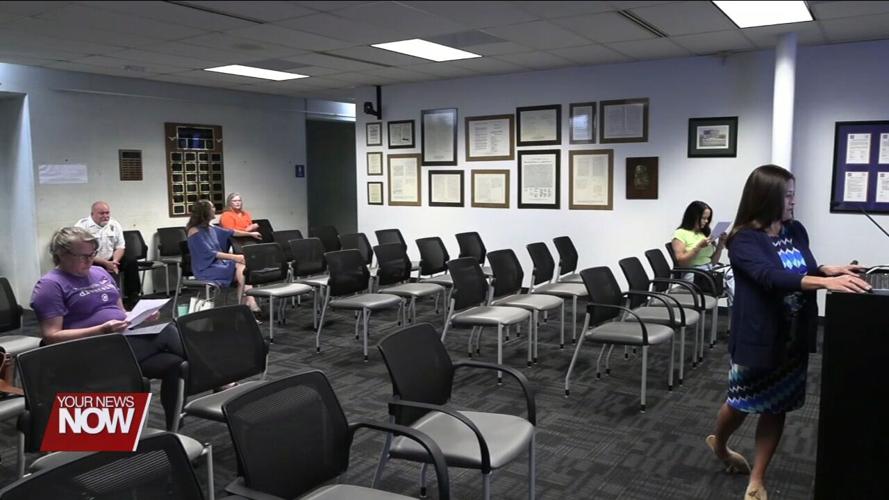
The City of Lima has established the proposed Community Entertainment District (CED) and met with interested businesses Tuesday night about the next steps.

Leading up to Tuesday night's conversations, the city applied for the CED and pursued the $50 million investment requirement for the district which encompasses Downtown Lima, including the amphitheater project and civic center, and areas just beyond downtown to promote economic growth and development through a variety of venues. At Tuesday night's meeting, one of the main topics revolved around liquor licenses for potentially eligible businesses interested, so Workforce and Small Business Development Coordinator, Amber Martin, provided interested establishments education about pursuing these licenses.

"The Community Entertainment District does come with D5-J liquor licenses. We have been issued up to 15 of those. There are requirements in place for those, so you must have at least two bathrooms and a level two service kitchen. The other requirements can be found through the Department of Commerce Liquor Division. That is where you go to apply for that," says Amber Martin, Workforce and Small Business Development Coordinator, City of Lima.

To pursue a D5-J liquor license, you will need to pay a $100 filing fee, and $2,344 annually for the license plus an additional $500 per year for Sunday sales.
COMMUNITY ENTERTAINMENT DISTRICT FREQUENTLY ASKED QUESTIONS (FAQ) PROVIDED BY THE CITY OF LIMA:
"COMMUNITY ENTERTAINMENT DISTRICT FREQUENTLY ASKED QUESTIONS (FAQ)
HOW ARE LIQUOR LICENSES APPORTIONED IN OHIO?
Under Ohio Law, liquor licenses are apportioned on the basis of population. Each city is given one full liquor license for every 2,000 residents in the city. With a population of 35,868, the City of Lima is eligible for eighteen licenses; however, with regional assets like the Veterans Memorial Civic & Convention Center, large employers, and ongoing development Lima is expected to draw far more visitors than its residential population each day. Creating a Community Entertainment District (“CED”) will create more dining and entertainment options for everyone who lives, works and plays in Lima.
WHAT IS A COMMUNITY ENTERTAINMENT DISTRICT (CED)?
In 2005, the state of Ohio passed legislation intended to revitalize communities and business districts. The legislation allowed for the creation of community entertainment districts (CED). When a CED is established, it creates a new pool of liquor licenses that can only be issued within the district. These licenses are called D5-J Licenses.
WHAT IS A D5-J LIQUOR LICENSE?
A D5-J license is a full liquor (beer, wine, spirits) license. The holder of a D5-J license must obtain a food service license and pass all necessary code inspections at the location. However a D5-J must be located within a CED and cannot be transferred outside the district.
WHAT ARE THE REQUIREMENTS FOR A D5-J LICENSE?
A holder of a D5-J must be in an area properly zoned for commercial activity, have a valid certificate of occupancy, have at least two restrooms, serve hot food and obtain at least a Level 2 Food Service License. Depending on the quantity and type of food sold, a Level 3 or higher license may be required. The minimum requirements for a Level 2 Food Service License are: a hand-washing facility, three tub sink or dishwashing facility, mop sink, waste disposal facilities, smooth easily cleanable surfaces for preparation and service, hot water, commercial microwave or oven, commercial refrigeration/freezer.
DOES A CED DESIGNATION ALLOW FOR OPEN CONTAINERS?
No. Open containers are not allowed under state law unless they are in designated outdoor refreshment areas (“DORAs”). A CED Designation has no effect on the open container law.
DOES A CED DESIGNATION CHANGE THE OBJECTION RIGHTS OF CHURCHES, SCHOOLS, ETC?
No. Any school, church or other organization with an objection right retains those rights. The CED designation does not change anyone’s statutory objection rights.
DOES A CED DESIGNATION CHANGE ZONING REQUIREMENTS?
No. Zoning trumps a CED Designation. If an area is currently not zoned for commercial activity, a CED Designation does not change the allowed uses.
DOES A CED DESIGNATION CHANGE SUNDAY SALES ELIGIBILITY OR HOURS?
No. Sunday Sales are not affected. If a precinct does not allow the sale of alcohol on Sundays, the CED Designation does not change the rules on Sunday Sales. Sunday Sales rules can only be changed by the voters of a precinct.
DOES A CED DESIGNATION CHANGE THE RULES ON OUTDOOR PATIOS FOR RESTAURANTS?
No. If a restaurant is in a CED and wants to have an outdoor patio, they must go through all of the normal requirements that any other applicant would have to go through to have an outdoor patio. The CED does not change these requirements.
DOES A CED DESIGNATION HAVE ANY OTHER EFFECTS ASIDE FROM THE NEW LICENSES?
No. All a CED does is create a pool of new restaurant licenses within a specific district. These licenses are sold by the State of Ohio at face value (on the secondary market, licenses are selling at 5-10x face value). CEDs can help small businesses get started and expand their hours.
DOES A CED APPLICANT GET TO CHOOSE WHO GETS THE NEW LICENSES?
No. The State of Ohio processes the applications on a first come first serve basis. The applicant must comply with all existing liquor laws of the State of Ohio and any local zoning, code and health requirements.
ARE THERE OTHER CEDs IN LIMA REGION?
No.
WHAT HAS BEEN THE EXPERIENCE WITH OTHER CEDs?
Positive. CEDs have helped these neighborhoods attract and retain new small businesses.
HOW MANY LICENSES WOULD A CED CREATE?
The CED would create up to 15 new D-5J licenses; however, only those restaurants that meet all of the requirements listed above would be able to obtain one of the licenses. All of the licenses may not be used, but they’ll remain available for future growth and development.
CAN A CED BE AMENDED?
Yes, City Council can amend a CED to expand or diminish its boundaries. City Council also has the power to repeal the CED.
DOES A CED DESIGNATION MAKE IT EASIER TO SHUT DOWN PROBLEM ESTABLISHMENTS?
If an establishment was in a CED and the CED is amended to remove the establishment from the CED, the establishment would be unable to renew their liquor license. This giver neighborhoods with CEDs one extra tool to combat “problem establishments”.
HOW MUCH DOES A D5-J LIQUOR LICENSE COST?
The filing fee for a D5-J liquor license is $100, and the license is $2,344 annually. Sunday sales (if permitted in the precinct) cost an additional $500 per year.
WHERE DO I APPLY FOR A D5-J LIQUOR LICENSE?
Liquor licenses in the State of Ohio are issued by the Ohio Department of Commerce Liquor Division. The D5-J liquor license applications can be found at, https://com.ohio.gov/divisions-and-programs/liquor-control/new-permit-info/applications-and-forms/d-5j-alcohol-sales-in-a-ced.”



