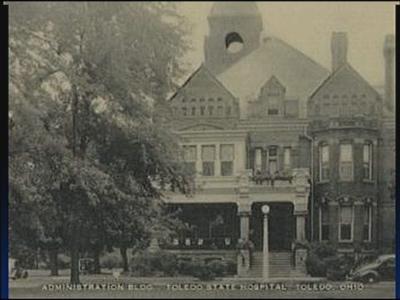
At a time when mental health issues have been brought to the forefront, there is still not a lot of public knowledge about this almost invisible disease in terms of its history and funding. By understanding its past, it can give us better insight into the illness.
Since the 1800s people suffering from mental illness have been stereotyped as lunatics or crazy.
Ohio at one point had 17 state hospitals treating over 25,000 people and there was really no effective treatment.
Christina Ryan Claypool herself was in and out of the Toledo State Mental Hospital. She was admitted for such extreme depression, which caused her to be suicidal. And she remembers her time there all too well.
Claypool feels blessed that she was so young at the time and didn't have to endure treatments like shock therapy.
Today treatment facilities and medications have improved tremendously… allowing people to live more full lives without adverse side effects.
For as many barriers that are being brought down in terms of treatment, there are new obstacles to face in terms of funding.
Many high profile shootings such as Sandy Hook Elementary and the Denver theater have brought mental health issues to the forefront.
To address the issue, Governor Kasich approved 5 million dollars to develop crisis intervention programs for young people with mental illness.
Michael Schanhofer of the Mental Health and Recovery Services Board says there is an unfair connection between mental illness and violent behavior.
Studies have shown that those suffering from mental illness are usually the victims of violence and not the perpetrators. Fewer than 10 percent actually have violent tendencies.



