

Ohio Governor Mike DeWine unveiled more information on the criminal justice and public safety initiatives that are included in his executive budget.
According to the Governor's office, the criminal justice and public safety portion of the executive budget aims to increase police transparency by expanding body camera accessibility, reduce crimes and substance abuse, assist local agencies in the recruitment and hiring of new peace officers, and create safe schools.

DeWine first discussed programs that were created in the last biennium budget thanks to funding from the Ohio General Assembly. The public safety programs include Recovery Ohio Law Enforcement Fund, Major Drug Interdiction Task Forces, and the Extradition Reimbursement Grant Program.
"We do not want a situation where a smaller department or mid-size department simply does not have the funds to go after and extradite that dangerous individual," said DeWine.
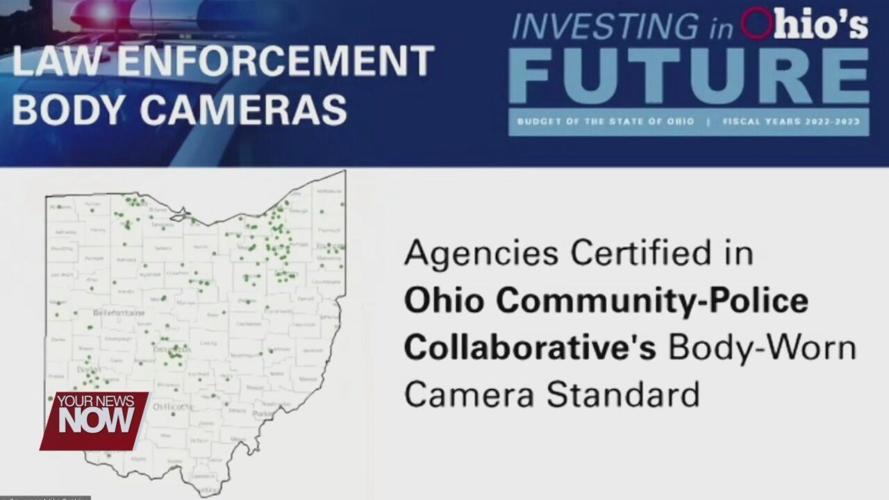
The Executive Budget also calls for $10 million dollars in grant funds to local law enforcement agencies across the state of Ohio to implement or enhance body-worn camera programs.

The funding will also include the body camera themselves as well as other expenses associated with running the program. Governor DeWine expressed his goal to have body cameras worn by officers to increase transparency between the departments and the community.
"My goal is every police officer in the State of Ohio to have a body camera. I think it protects police, it protects the public... it's good to have that transparency."
The state of Ohio will also invest $6.5 million to expand the Ohio Narcotics Intelligence Center (ONIC). The center assists the Ohio Narcotics Task Force and law enforcement agencies through investigative, analytical, and digital forensic support.

ONIC was launched in December of 2019, where it has assisted with more than 100 criminal investigations, analyzed more than 220 cell phones, and conducted more than 840 forensic examinations.
Throughout 2020, ONIC has reviewed over 200 Terabytes of Data, three million images, 2.6 million text messages, and 120,000 videos.
ONIC main offices are located in Cleveland and Columbus. However, the funding will allow for two more district offices in Toledo and Cincinnati.
"Adding these offices and additional manpower will open the capacity for more cases with more law enforcement agencies with the assistance that they need," said DeWine.
One million dollars will also be used over the biennium to further enhance efforts to attract those who are best suited for law enforcement, according to DeWine.
The budget will also set $8 million over the biennium to help fund violence reduction projects such as gun detection technology and community initiatives to reduce gun violence. The funds will also lead to the creation of Gun Crime Intelligence Centers.
"These centers are intelligence hubs for gun crime investigation," said DeWine. "These centers put key law enforcement authorities from different jurisdictions all under one roof."
Additional funding will also be budgeted for the Ohio School Safety Center (OSSC). A total of $4.6 million will go towards the support of operations and ongoing initiatives. The OSSC assists local schools and first responders with preventing, preparing for, and responding to threats and acts of violence, including self-harm, through a holistic, solutions-based approach to school safety.
The funding for the OSSC will also provide for maintenance and promotion of the Safer Ohio Schools Tip Line. The number for the tip line is 844-723-3764.
Lastly, one million dollars will also be provided over the biennium for the Expedited Pardon Project Proposal. DeWine says the project helps Ohio reach more people who have lived upstanding lives post-conviction and put qualifying individuals on the fast-track to be considered for a Governor's pardon.
Governor DeWine's executive budget covers the fiscal years of 2022-2023.



