Severe thunderstorms and tornadoes are some of the most exciting and some of the most dangerous weather events we see in Ohio. But it takes communication and coordination between your local meteorologists and those at the National Weather Service to keep everyone informed and safe.
Kyle and Laura are the faces you may associate with weather on the television, but there are off-camera meteorologists working to keep you safe during severe weather. The your news now weather team traveled to Wilmington Ohio to introduce you to one of them at the national weather service.
There are several NWS offices throughout the country, three of which service our viewing area. For our more northern and western counties, we rely on north Webster, Indiana. Further south, we turn to Wilmington, Ohio. And the Cleveland office handles Hancock and Wyandot counties. Each of them also have their own radar towers, giving those of us in and around Limaland, adequate coverage. But before severe weather even strikes, the process begins well to our southwest.
Wilmington Meteorologist Mary Jo Parker explains that watches are initially issued by the Storm Prediction Center in Colorado. Local NWS offices scattered throughout the U.S. then have the authority to extend or cancel those watches as necessary.
It's also these offices that issue our severe thunderstorm and tornado warnings. They have their eyes on the radar, just like Kyle and Laura do, watching for rotation and other indicators that a storm may be capable of turning severe. It takes coordination between the on-camera meteorologist and those off screen to keep everyone safe.
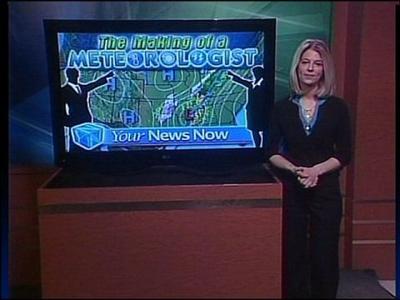
Meteorologists like us also rely on storm spotters for "ground truths" to know what is actually happening out in the field, supporting what we see on radar. In part 3 of making of a meteorologist, Holly Geaman introduces us to our local storm spotters.



