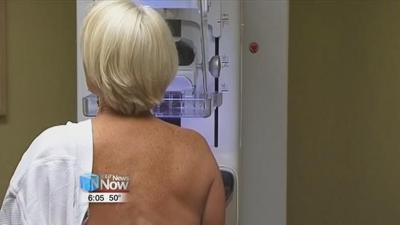
Eighteen years ago, then 34-year-old Brigitte Edwards of Lima felt every bit as healthy as she should, being a woman in her 30's.
"I was in good shape, I didn't feel like I was sick, I didn't look sick, act sick, or anything," says Edwards. "I was just living a full life."
She did not question her health until the day she a dream that she had cancer. Even though she felt healthy and had always been told to wait until she was 40 to get a mammogram, she felt pulled by her dream to get a screening—a move that may have saved her life.
"They said they're sure that what they found was cancer, and it was calcium deposits," says Edwards. "There was never a lump found. Calcium deposits can only be detected through a mammogram or ultrasound."
Edwards, who has been cancer free for 18 years now, is not alone as a woman being diagnosed with the disease under the age of 40. While it is not as common, it is still possible and many doctors nowadays recommend women get a baseline screening in their 30's.
"We do what's called a baseline mammogram starting a the age of 35 and then the patient does not return until she's 40," says Dr. Darlene Weyer, Medical Director for Lima Memorial's Women's Health Center. "After the age of 40, she should come every single year and have a mammogram."
According to Dr. Weyer, mammograms can make all the difference between just needing a lump removed or needing the entire breast removed.
"We can detect breast cancers way before they're able to be felt; before the patient has a symptom, when they're teeny, tiny deep in the breast," says Weyer. "When we can catch them when they're tiny like that, it's easier to treat them and the patient's prognosis is much better, and the survivability is much greater."
Edwards daughter, Princess Kennedy, 24, is already looking into getting a mammogram herself, given her mother's history with the disease. Edwards hopes that other young women consider taking the same kind of initiative with their own doctors.



