

The Ohio Division of Natural Resources says in April 2021, Shepherd allegedly dumped 7,000 gallons of a substance that contained ammonia into the river.
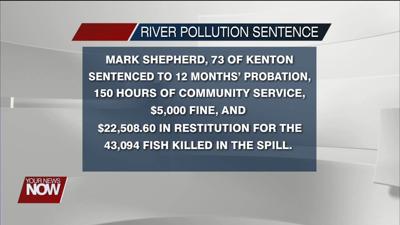
HARDIN COUNTY, OH (WLIO) - A Hardin County man is sentenced to 150 hours of community service and ordered to pay a $5,000 fine after a large fish kill in the Scioto River. 73-year-old Mark Shepherd was also sentenced to 12 months probation and must pay more than $22,000 in restitution to the Division of Wildlife for the value of the dead fish. More than 43,000 dead fish were collected, including smallmouth bass, flathead, catfish, and minnows. The Ohio Division of Natural Resources says in April 2021, Shepherd allegedly dumped 7,000 gallons of a substance that contained ammonia into the river. A Hardin County fisherman saw the dead fish and reported it to the authorities. Shepherd pleaded guilty to violating the Clean Water Act.
August 12, 2024, Press Release from the Ohio Department of Natural Resources: COLUMBUS, Ohio – The Ohio Department of Natural Resources (ODNR) Division of Wildlife was part of an investigation that resulted in Mark Shepherd, 73, of Kenton, being sentenced in federal court today for violating the Clean Water Act by dumping pollutants and hazardous substances into waterways, killing thousands of fish in the Scioto River.
In April 2021, Shepherd, the owner and operator of Cessna Transport Inc. and A.G. Bradley Inc., unlawfully discharged 7,000 gallons of a substance containing ammonia into the Scioto River. The substance originated from Shepherd’s facilities. An angler in Hardin County reported a fish kill resulting from the discharged pollutants. The Division of Wildlife determined the discharge killed 43,094 fish, which included smallmouth bass, flathead catfish, sunfish, and minnows. Those fish were valued at $22,508.60.
In May 2024, the defendant pleaded guilty to violating the Clean Water Act. Today Shepherd was sentenced to 12 months’ probation, 150 hours of community service, a $5,000 fine, and a $25 special assessment fee. He was also ordered to pay restitution of $22,508.60 to the Division of Wildlife which represents compensation for the aquatic animals killed.
This case was investigated by ODNR Division of Wildlife, the Ohio Attorney General’s Office Environmental Enforcement Unit, the Ohio Environmental Protection Agency, the Ohio Bureau of Criminal Investigation, and the U.S. Environmental Protection Agency.
The Division of Wildlife is dedicated to enforcing laws that protect Ohio’s wildlife. Input and concern from the public are integral to those enforcement efforts. Anyone who witnesses a wildlife violation in Ohio can call 1-800-POACHER (1-800-762-2437). Reports are kept anonymous. Information that results in a conviction of a wildlife crime may result in a reward.
Ohio wildlife officers have statewide authority to enforce wildlife regulations and protect state lands, waterways, and property. As state law enforcement officers, they contribute to public safety in their local areas and Ohio’s great outdoors. They also speak to hundreds of clubs and groups about conservation and wildlife programs, perform fish and wildlife surveys, and provide technical advice and instruction about wildlife management issues, hunting, fishing, and other outdoor related recreation.



