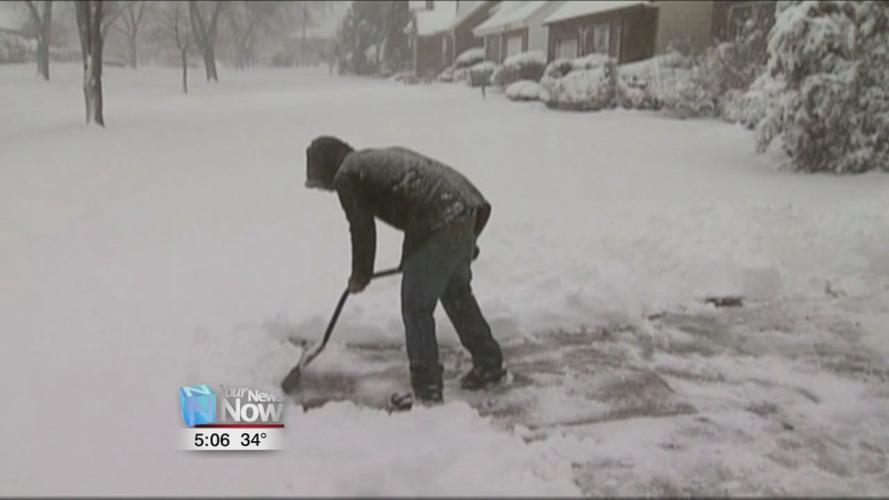


With winter weather expected to return this week, the Allen County Soil and Water Conservation District wants to remind people to take it easy on the salt to clear the ice.
Some people may think that the more salt the better, but the conservation district says over-salting your driveway and sidewalk could be bad for your vehicles, pets, plants, and eventually the waterways. Freshwater aquatic life and plants don't like the salt, so to avoid it making to the storm sewer and then the river, you are asked to follow a few tips. One is to shovel before the snow or sleet can turn to ice, and if you have to spread salt remember a little bit can go a long way.

“Keep the amount of salt you are spreading at a minimum. A 12 oz coffee mug full of salt is enough to melt the snow and ice from a 20 foot driveway or 10 sidewalk squares,” says Casey Heilman, the Community Outreach Coordinator for the ASWCD.
Also to prevent salt runoff from reaching the waterways, Heilman says to sweep up the excess salt when the ice has melted, and to switch to sand or a deicer that is designed for colder temperatures if the mercury drops below 15 degrees Fahrenheit.
Media release from Allen County Soil and Water Conservation District: The Midwest winter can be tough on our communities. Sodium Chloride or road salt is used to keep driveways and sidewalks safe, but the cost of using too much salt goes far beyond the pavement. Excess salt can damage vehicles, harm pets, and plants, and end up in our waterways. Using the right amount can help to protect our watershed, save money, and keep you safe. This winter, keep in mind the four S’s of using salt to help reduce your impact on our environment
SHOVEL
Remove all snow from your driveway and sidewalks before it has a chance to turn to ice. Salt should be used after the snow has been removed.
SIZE
More salt does not mean more melting. A 12-ounce coffee mug of salt is typically enough to melt the snow and ice from a 20-ft driveway or about 10 sidewalk squares. It should be spread so there are about 3 inches of space between each grain of salt. Applying excess salt can harm your lawn, flower beds, trees, and can cause pollution to nearby streams. Just one teaspoon of salt permanently pollutes 5 gallons of water
SWEEP
If there is leftover salt on the ground after the snow and ice melts, then you’ve used too much. Sweep up leftover salt and next time apply less.
SWITCH
Salt only works in temperatures above 15 degrees Fahrenheit. For colder temperatures use a small amount of sand or choose a difference deicer formulated for colder conditions.
Remember, everything that goes down the storm drain ends up in the river. That includes salt, melted salty ice, and snow. All of these things contribute to polluting clean water. So, this winter, don’t over season your sidewalk and use the right amount of salt.
For additional information about the forum please contact Casey at 419-223-0040 X110 or casey@allenswcd.com.



