



COLUMBUS, OH (STATE WEXNER MEDICAL CENTER) - It's something that's too often ignored, but the health issues of past generations can tell you a lot about your future risks. Researchers are learning more about one particular inherited heart condition that often leads to heart failure at a young age and it is especially widespread in Black families. Barb Consiglio has more on the conversations you should have with your family and how continuing that discussion with your doctor could save your life.

Five months after having her son, Sharon Starks was rushed to the ER feeling faint and short of breath.
"He came to see me, my primary care doctor, and he said, I think it's your heart. And I was like, my heart? I'm 26 years old. It can't be my heart," stated Sharon Starks, dilated cardiomyopathy patient.

Sharon was shocked to learn she had heart failure, but as she thought about her family history, it began to make sense.
"My maternal grandmother, she died at the age of 29. She had a massive heart attack," added Starks.
Sharon has dilated cardiomyopathy (dye-lay-ted car-dee-oh-my-ah-puh-thee)— a disease that affects the heart's ability to pump blood to the rest of the body. It's estimated over a million Americans have DCM. Because it tends to run in families, researchers at the Ohio State University Wexner Medical Center led a nationwide study that tested parents, siblings, and children of cardiomyopathy patients and found the inherited trait is especially prevalent among black families.

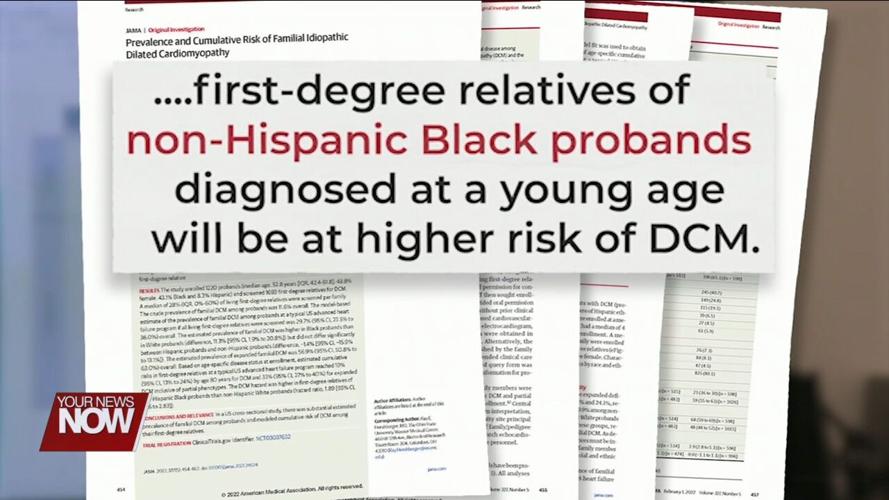
"Black patients with dilated cardiomyopathy had a greater risk of having family members who also had evidence of dilated cardiomyopathy. That was almost 40% versus about 28% in white patients," said Dr. Ray Hershberger, State Wexner Medical Center.
Researchers also found that the younger someone is diagnosed with DCM, the more likely it is to run in their family.
"Family-based screening is essential. You don't need genetic evidence to know that with the diagnosis of DCM, family members should be screened clinically," stated Dr. Hershberger.
It's vital information Sharon says is important to share to prevent their family history from threatening their healthy future.
"A lot of times in our community, we don't want to talk about health and bad things that have happened to family members regarding their health, but it's important to have these conversations so that we can help each other," said Starks.
February 21, 2024 Press Release from OSU Wexner Medical Center: COLUMBUS, Ohio – About 1 in 250 Americans have dilated cardiomyopathy (DCM), a type of inherited heart muscle disease that can cause heart failure at a young age. Families of Black patients with DCM of unknown cause are at greater risk of developing the disease than those of white patients, according to results of a multi-site study led by researchers at The Ohio State University Wexner Medical Center and College of Medicine.
“Having Black families in this study was critically important because most studies have included only whites, even though Blacks with DCM have a higher risk of heart failure-related hospitalization and death. We don’t yet understand why families of Black patients are at greater risk for DCM than those of white patients. It could be from differences in genetics, comorbidities or social determinants of health,” said Ray Hershberger, MD, cardiologist and division director of human genetics at Ohio State. He was senior author of the study which published in the Journal of the American Medical Association. Hershberger leads the DCM Consortium, which is composed of 25 leading academic U.S. heart failure/heart transplant programs that contributed to the study.
Using mathematical modeling techniques, researchers estimated that 30% of patients with DCM had at least one first-degree family member (child, sibling or parent) with DCM. When broken down by self-identified race, an estimated 39% of Black patients and 28% of white patients had at least one first-degree family member with DCM.
The five-year study enrolled 1,220 patients with DCM, of which 44% were women, 43% were Black and 8% were Hispanic, along with 1,693 of their first-degree relatives. The study estimated that about 1 in 5 first-degree family members of patients with idiopathic, or unknown, DCM were at risk of getting the condition during their lifetime.
Dilated cardiomyopathy can be a silent killer
DCM is a condition in which the heart muscle weakens and the left ventricle enlarges. It’s the most common cause of patients needing a heart transplant and is responsible for about half of heart failure cases that result from a weakened left ventricle.
DCM can occur in family members at almost any age but the typical onset is mid 40s. The severity of the condition can vary within families, with some family members exhibiting minor symptoms while others may die of heart failure or an arrhythmia causing sudden cardiac death. Symptoms include shortness of breath with exertion, fatigue, edema of the legs and feet, an irregular heartbeat or lethal arrhythmias.
“DCM can be silent for months to years before symptoms begin. Eventually heart failure may develop, which is late-phase disease. Identifying DCM at an early stage and starting treatment can help slow its progression and prevent sudden cardiac death,” Hershberger said.
Heart failure at age 26
Sharon Starks was only 26 years old when she first started showing signs of heart failure. She woke up at night with shortness of breath and sounding like she was gurgling water. She knew something wasn’t right and was stunned to learn that she had DCM.
“I ended up in the hospital and coded a couple of times. It can be a silent killer and it’s so scary,” she said.
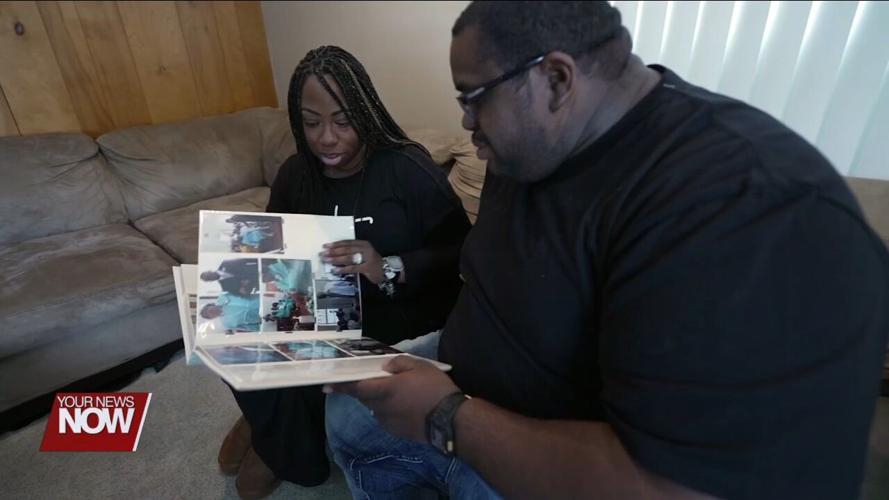
Starks can now see a family connection — her grandmother died at age 29, and her mother had double heart bypass surgery at age 44. Ever since her diagnosis, Starks has been talking with family members about their risk and plans to have her son screened for the condition when he’s older.
“It's important that we get those screenings done and take it seriously. Sometimes as a family we don’t tell each other what’s going on. Families definitely need to have more conversations, especially if there’s a family history of heart disease,” she said.
The Dilated Cardiomyopathy Consortium was funded by a $12.4 million grant from the National Heart, Lung, and Blood Institute of the National Institutes of Health and a supplemental grant from the National Human Genome Research Institute. For this study, computational infrastructure was provided by The Ohio State University Division of Human Genetics Data Management Platform and the Ohio Supercomputer Center. Hershberger is the Charles Austin Doan Chair of Medicine.



