


Injuries are often part of the job for law enforcement officers. But the injuries that can't be seen often pose serious health threats that can manifest years down the road.
COLUMBUS, OH (OSU WEXNER CENTER) - Injuries are often part of the job for law enforcement officers. But the injuries that can't be seen often pose serious health threats that can manifest years down the road. Barb Consiglio tells us how new research reveals just how prevalent head injuries are in law enforcement and how their impact reaches far beyond their physical health.

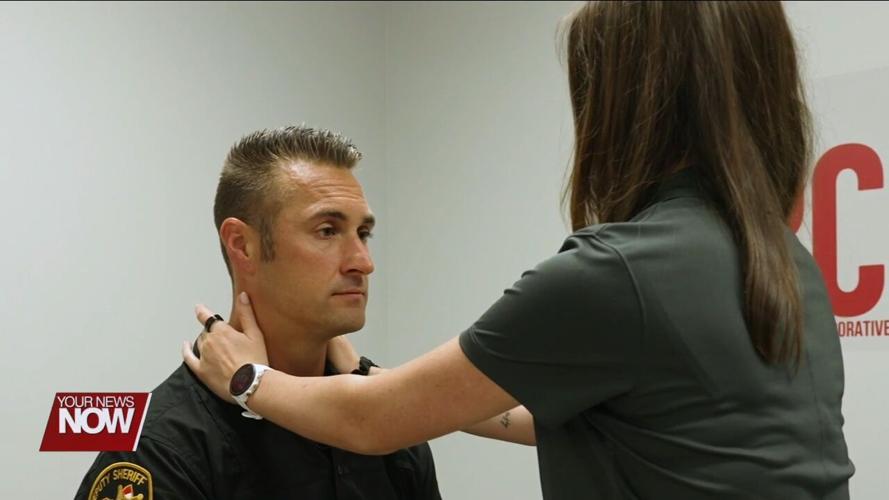
Walters partnered with researchers at the Ohio State University Wexner Medical Center to examine the prevalence of head injuries among those in law enforcement and their correlation to mental health challenges.
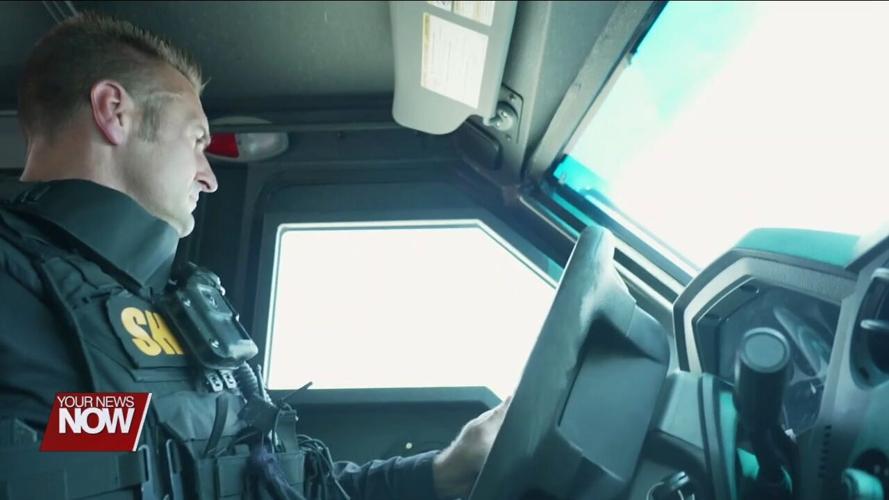
Deputy Josh Walters knows his health is paramount to his job performance and safety.
"Not only do my colleagues depend on me, but the community depends on me. And if I can't physically keep up, then it could be a life-or-death situation for somebody," said Josh Walters, sheriff's deputy for Franklin County, Ohio.

Walters is working with experts at Ohio State to translate the study results into action, including return-to-duty protocols that mirror those in sports and the military and can be shared with police organizations nationwide to help protect those who protect all of us.
Walters leads his office's peer support team that connects deputies with the health resources they need. And although mental health support is improving, little is known about why law enforcement officers are twice as likely to suffer from depression or PTSD as the general population.
So Walters partnered with researchers at the Ohio State University Wexner Medical Center to examine the prevalence of head injuries among those in law enforcement and their correlation to mental health challenges.

Those who sustained head injuries also had higher PTSD symptoms, shining a spotlight on the need to identify when head injuries happen and provide effective treatment.
The study finds nearly three-quarters of officers report sustaining one or more head injuries, and more than 25% have lost consciousness, indicating a probable traumatic brain injury.
"The proportion of individuals who reported mild or greater depressive symptoms was higher in those who had a prior history of one or more head injuries," explained Dr. Jaclyn Caccese, The Ohio State University Wexner Medical Center.
Those who sustained head injuries also had higher PTSD symptoms, shining a spotlight on the need to identify when head injuries happen and provide effective treatment.
"Sometimes people aren't actually removed from their duty; they don't undergo any type of rehab. That could also lead to long-term health complications," added Dr. Caccese.
Now Walters is working with experts at Ohio State to translate the study results into action, including return-to-duty protocols that mirror those in sports and the military and can be shared with police organizations nationwide to help protect those who protect all of us.
"Now we have some data that we can present to administrations, to unions, to leadership that says, 'Here's the problem. This is how we can fix it. Let's start working that process," said Walters.
In law enforcement, a link between head injuries and depression, PTSD
Press Release written by Emily Caldwell, The Ohio State University Wexner Medical Center: COLUMBUS, Ohio – A new study is the first to shed light on the high prevalence of head injuries, and related mental health symptoms, in a previously overlooked population when it comes to concussion surveillance: law enforcement officers.
The survey of Ohio law enforcement officers found that 74% reported a lifetime history of one or more head injuries, and 30% had a head injury that happened on the job. Many more of these injuries went unreported than were treated by a health care professional. And further analysis showed post-traumatic stress disorder and depressive symptoms were higher in those who had experienced one or more head injuries.
“This is an area where we have to improve awareness, just like we did in the sport concussion world,” said lead author Jaclyn Caccese, PhD, assistant professor in the School of Health and Rehabilitation Sciences at The Ohio State University Wexner Medical Center.
“The goal is really to improve officer safety and health in the long term,” said Caccese, also an investigator in Ohio State’s Chronic Brain Injury Program. “And I think there’s a lot of potential there, especially when it comes to improving career longevity – that although treating these injuries is difficult in the moment, it leads to a longer career, better health outcomes and better quality of life, not only in their service, but also in retirement. I think with that awareness, they will be more likely to report injuries as they sustain them.”
The study is published today (Aug. 5, 2024) in the Journal of Head Trauma Rehabilitation.
The medical and law enforcement researchers who co-authored the study have published a separate paper advocating for implementation of a concussion return-to-duty protocol for law enforcement officers – similar to practices already in place in sports and the military.
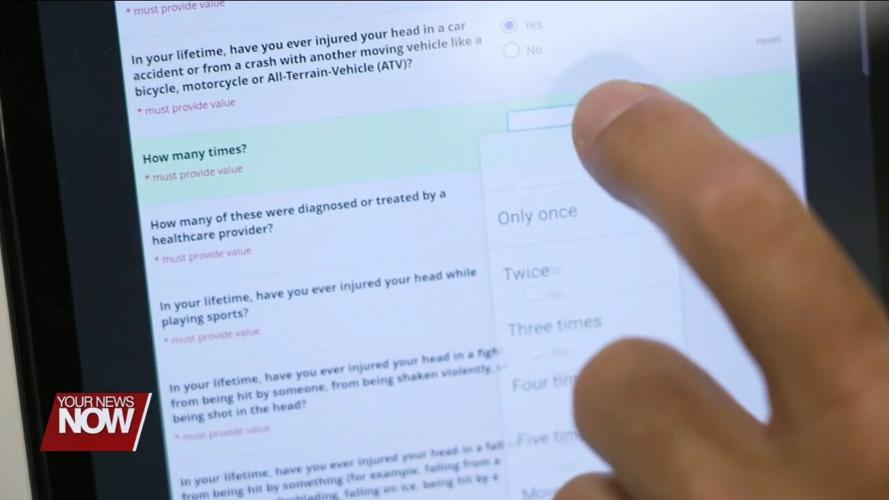
The researchers surveyed 381 law enforcement personnel in central Ohio about their lifetime head injury history, years of service in the military and civilian law enforcement, and rank and section assignment (such as patrol, corrections or administration). The participants also completed questionnaires assessing symptoms of PTSD and depression.
Of those respondents, 282 reported one or more prior head injuries, mostly from sports, followed by such incidents as falling or being hit by something or someone, a car accident, or exposure to a blast. Over 50% of participants reported head injuries involving loss of consciousness or followed by feeling dazed or confused, or having a gap in memory – all signs of a probable traumatic brain injury (TBI). A concussion is considered a mild TBI.
Nine percent of total respondents screened positive for PTSD symptoms and 36% reported mild or greater depressive symptoms. Participants with a prior head injury reported higher symptoms for both conditions. Researchers estimated that fewer than 1 in 4 head injuries was diagnosed or treated by a health care provider.
Caccese said researchers are still learning about the long-term effects of concussions, but current evidence suggests head injuries that go untreated may increase risk for depression, anxiety, PTSD and problems with cognitive function and memory.
For law enforcement officers, concussions often occur in the heat of their job. The stress associated with the role and poor sleep from shift work are also common in this population. The circumstances can contribute to worse outcomes following a head injury.
“Sometimes law enforcement officers need to complete the task they’ve set out to do, or it’s not a safe environment to just pull yourself off duty right away. And I think adrenaline sometimes masks concussion symptoms,” Caccese said. “In sports, we’ve been able to increase removal from play, and improve rehabilitation and return-to-play following injury. Hopefully that will improve long-term health outcomes in athletes. We’re trying to get that information translated to the occupational context.”
Study co-author Josh Walters, a deputy in the Franklin County, Ohio, Sheriff’s Office, leads his office’s peer support team of deputies certified to work with personnel experiencing a range of problems. Teaming up for the study of head injuries and their association with PTSD and depressive symptoms grew out of the peer group’s long-term partnership with Ohio State researchers and clinicians to enhance deputy health with physical therapy, sleep studies and concussion-related training.
“Part of what we’re doing with Ohio State is looking at, how can we extend the health of the deputy?” Walters said. “Being physically fit is an important part of our job because not only do my colleagues depend on me, but the community depends on me. And if I can’t physically keep up, then it could be a life-or-death situation for somebody.”
The next step is working to adopt the return-to-duty protocol proposed by the team – removal from duty, a gradual increase in activity, and screening by a medical provider before returning to full duty – and testing its effectiveness and adaptability to different organizations.
“Now we have some data that we can present to administrations, to unions, to leadership that says, ‘Here’s the problem. This is how we can fix it. Let’s start working that process,’” Walters said.
Additional co-authors are Carly Smith, Nathan Edwards, Angela Emerson, Enora Le Flao, Jeffrey Wing, Joshua Hagen and James Onate of Ohio State and Scott Paur of the Franklin County Sheriff’s Office.
This work was supported by the Assistant Secretary of Defense for Health Affairs endorsed by the Department of Defense, through the Traumatic Brain Injury and Psychological Health Research Program under Award No. HT9425-23-1-0520 and HT9425-23-1-0521. Opinions, interpretations, conclusions and recommendations are those of the author and are not necessarily endorsed by the Department of Defense.



