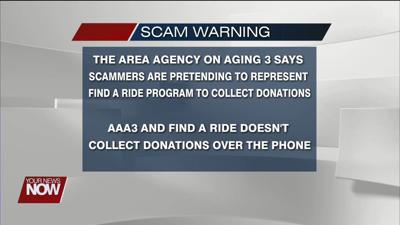


The Area Agency on Aging 3 is warning the public about a scammer pretending to represent one of their programs.
The AAA3 says that people have received calls from scammers that say they are collecting donations for the Find-a-Ride program. They want to remind everyone that the Find-a-Ride and the Area Agency of Aging 3 does not solicit donations by phone. They ask that people do not give out bank or credit card information to people saying they are from that program.
Press Release from the Area Agency on Aging 3: Lima, OH – Local area residents have reported receiving calls from individuals claiming to be from the Find A Ride Program soliciting donations.
The Find A Ride Program and Area Agency on Aging 3 does not contact via phone to solicit donations. Please do not give bank or credit card information to anyone over the phone that claim to be seeking donations on behalf of Find A Ride or the Area Agency on Aging 3.
Four Signs That It’s a Scam
1. Scammers PRETEND to be from an organization you know.
Scammers use a real organization’s name or make up a name that sounds official. Some pretend to be from a business you know, like a utility company, a tech company, or even a non-profit asking for donations. They use technology to change the phone number that appears on your caller ID.
2. Scammers say there’s a PROBLEM or a PRIZE.
Some scammers say there’s a problem with one of your accounts and that you need to verify some information. Others will lie and say you won money in a lottery or sweepstakes but have to pay a fee to get it.
3. Scammers PRESSURE you to act immediately.
Scammers want you to act before you have time to think. If you’re on the phone, they might tell you not to hang up so you can’t check out their story.
4. Scammers tell you to PAY in a specific way.
How to Avoid a Scam
- Block unwanted calls and text messages.
- Don’t give your personal or financial information in response to a request that you didn’t expect. Honest organizations won’t call, email, or text to ask for your personal information, like your Social Security, bank account, or credit card numbers.
- Resist the pressure to act immediately.
- Know how scammers tell you to pay. Never pay someone who insists you pay with cryptocurrency, a wire transfer service like Western Union or MoneyGram, or a gift card. And never deposit a check and send money back to someone.
- Stop and talk to someone you trust.



