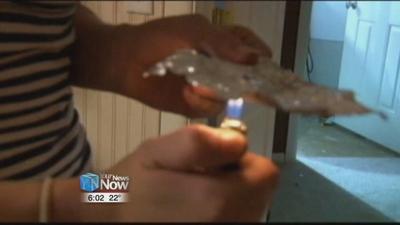
Emergency Responders have been busy battling the increase in heroin overdoses in Allen County. Your Hometown Stations' Leslie Moreno spoke to local EMS and the Allen County Health Department to find out how bad the situation is.
According to the Center for Disease Control and Prevention, heroin use and overdoses has been increasing in recent years, but to pinpoint the exact number, Director of Prevention and Health Services in Allen County, Tami Gough says it is not as easy as it sounds. "That is a very difficult number to pin down because of the different sources of treatment that an individual can receive particularly with the use of Narcan kits or the drug Naloxone that will reverse the overdose and right now there is no uniform reporting system that all people that use the kits are required to report to. So that the uniform thing that we do know though is that we are in a crisis situation with the number of overdoses here in Lima, Allen County, the state, and across the country."
While many think EMS and paramedic officials keep track of drug abusers and can just simply hand social services a list of names, Fire Chief of Bath Township, Joe Kitchen says due to medical privacy laws, they are not allowed to give social services any names. He says the only thing they can do is work closely with hospitals.
"Both Lima Memorial and St. Rita's both have pretty robust social service programs so we can work closely with them to try to get these people to other outside agencies, so I think it's a pretty good system," commented Joe Kitchen
The Allen County Health Department provides Narcan kits to EMS, but they say anyone can walk into their local pharmacy store and ask for a kit without a prescription.
"The goal is to put Narcan kits into the hands of people who either live with an addict, or are friends with an addict, or perhaps an addict themselves, so in the event that there is an overdose they have the tools there to revive the individual," said Director of Prevention and Health Services in Allen County, Tami Gough.
Over the last couple years, Narcan has gone from intravenous to an intranasal injection for a much easier administration. First responders say their main goal is to save lives and they team up with local mental health service agencies to provide drug abusers with the help they need.



