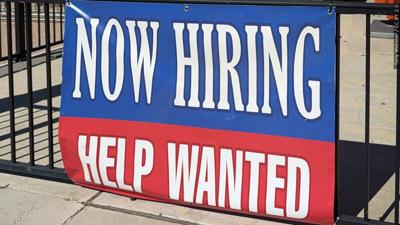
WASHINGTON (AP) — Sluggish hiring last month closed out a year of weak employment gains that have frustrated job seekers even as layoffs and unemployment have also been low.
Employers added just 50,000 jobs in December, nearly unchanged from a downwardly revised figure of 56,000 in November, the Labor Department said Friday. The unemployment rate slipped to 4.4%, its first decline since June, from 4.5% in November, a figure also revised lower.
The data suggests that businesses are reluctant to add workers even as economic growth has picked up. Many firms hired aggressively after the pandemic and no longer need to fill more jobs. Others have held back due to widespread uncertainty caused by President Donald Trump’s shifting tariff policies, elevated inflation, and the spread of artificial intelligence, which could alter or even replace some jobs.
Nearly all the jobs added in December were in the health care and restaurant and hotel industries. Manufacturing, construction and retail companies all shed jobs.
The jobs data are being closely watched on Wall Street and in Washington because they are the first clean readings on the labor market in three months. The government didn’t issue a report in October because of the six-week government shutdown, and November’s data was distorted by the closure, which lasted until Nov. 12.
Still, December’s report caps a year of sluggish hiring, particularly after “liberation day” in April when President Donald Trump imposed sweeping tariffs on dozens of countries, though many were later delayed or softened. The economy generated an average of 111,000 jobs a month in the first three months of 2025. But that pace dropped to just 11,000 in the three months ended in August, before rebounding slightly to 22,000 in November.
Subdued hiring underscores a key conundrum surrounding the economy as it enters 2026: Growth has picked up to healthy levels, yet hiring has weakened noticeably and the unemployment rate has increased in the last four jobs reports.
Last year, the economy gained just 584,000 jobs, sharply lower than that more than 2 million added in 2024. It's the smallest annual gain since the COVID-19 pandemic decimated the job market in 2020.
Most economists expect hiring will accelerate this year as growth remains solid, and President Donald Trump's tax cut legislation is expected to produce large tax refunds this spring. Yet they acknowledge there are other possibilities: Weak job gains could drag down future growth. Or the economy could keep expanding at a healthy clip, while automation and the spread of artificial intelligence reduces the need for more jobs.
Even the weak 2025 figures are likely to be revised lower in February, when the government completes an annual benchmarking of the jobs figures to an actual count of jobs derived from companies' unemployment insurance filings. A preliminary estimate of that revision showed it could reduce total jobs as of March 2025 by 911,000.
And last month, Federal Reserve Chair Jerome Powell said that the government could still be overstating job gains by about 60,000 a month because of shortcomings in how it accounts for new companies as well as those that have gone out of business. The Labor Department is expected to update those methods in its report next month.
With hiring so weak, the Federal Reserve cut its key short-term interest rate three times late last year, in an effort to boost borrowing, spending, and hiring. Yet Powell signaled that the central bank may keep its rate unchanged in the coming months as it evaluates how the economy evolves.
Even with such sluggish job gains, the economy has continued to expand, with growth reaching a 4.3% annual rate in last year's July-September quarter, the best in two years. Strong consumer spending helped drive the gain. The Federal Reserve Bank of Atlanta forecasts that growth could slow to a still-solid 2.7% in the final three months of last year.
At the same time, inflation remains elevated, eroding the value of Americans’ paychecks. Consumer prices rose 2.7% in November compared with a year ago, little changed from the beginning of the year and above the Fed’s 2% target.



