




(Ohio State University Wexner Medical Center) - Maybe you're the healthy eater or the marathon runner in your family. But even if you're doing everything right, there may be threats of serious diseases hidden in your DNA. Barb Consiglio shows how the latest version of an easy online tool employs technology to assess your genetic past, identify your future risks, and allow you to take control of your health.

After seeing several family members suffer from heart disease at an early age, Jerred Ziegler does what he can to stay healthy.
"I didn't overly think about it until my dad started having the same heart problems that my grandpa had as well," commented Jerred Ziegler. "So when you start to see that trend, and especially the men in our family, you start to think about how that could impact you down the road too."

While many know that family history is a risk factor, genetics may play a bigger role than you think in the development of life-threatening diseases, something that's becoming clearer as genetic medicine advances
"By understanding how your family and family history and personal history may impact genetic risk, gives you the power to make a decision about your future," said Elizabeth Jordan, Ohio State Wexner Medical Center.

That may include genetic testing or additional screenings, but the first step is identifying your risk. The family health risk calculator was developed by medical experts and data scientists at the Ohio State University Wexner Medical Center and its comprehensive cancer center. It is the only tool of its kind to screen for both cancer and cardiac risk using an individual's personal and family health data. The tool uses advanced algorithms to accurately determine if you are at elevated risk of developing specific types of cancers and heart conditions known to have genetic ties.
"By knowing what types of cancer, for example, are in your family, age of diagnosis, and then using the tool, the tool itself looks for certain red flags," commented Kevin Sweet, Ohio State Wexner Medical Center.
And the more detail you have, the better, which is why experts have continued to improve the tool for more than twenty years, with the latest version allowing you to update your assessment as you gather more information.
"Say two years down the road, other family members have developed cancer or heart disease, you can go back in, add that additional information and update your assessment," added Sweet.
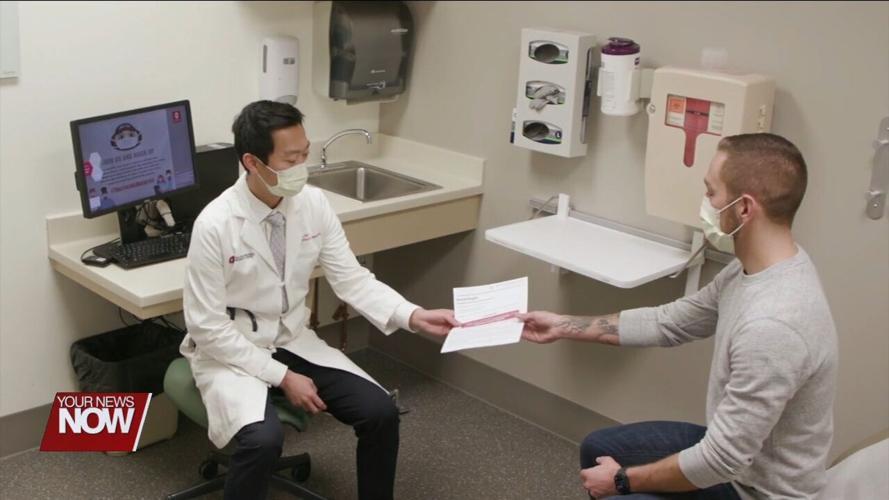
The results can be shared with family members as well as with your doctor, something Jerred says empowers him to stay ahead of any developing issues.
"I think it's super easy to maybe avoid those hard questions about your health that you don't want to face yourself, but eventually it's going to catch up to you. So I think it's super important to be proactive about it so you don't have those issues down the road," said Ziegler.
Press Release from The Ohio State University Wexner Medical Center: COLUMBUS, Ohio – A cutting-edge upgrade of an online tool developed by genetic experts and data scientists at The Ohio State University Comprehensive Cancer Center – Arthur G. James Cancer Hospital and Richard J. Solove Research Institute (OSUCCC – James) and The Ohio State University Wexner Medical Center is the first to fully assess an individual’s hereditary risk for cancer or heart disease using personal and family health history.
The free Family Health Risk Calculator uses a combination of algorithms linked to the latest evidence-based hereditary and genetics guidelines to determine the risk to having a hereditary predisposition to cancer or heart disease. At least 10% of all cancers are based on hereditary risk, and the field of cardiovascular genetics has been rapidly advancing, said Kevin Sweet, a licensed genetic counselor and professor of clinical internal medicine at Ohio State’s College of Medicine.
The calculator determines if individuals have an average or elevated risk to having a hereditary predisposition to cancer or heart disease.
“The goal is to identify people who are at risk before they even know they might be predisposed to heart disease or cancer. Knowing you’re at elevated risk gives you the power to make decisions about your future to lower your risk or even prevent disease. It might lead to genetic counseling or testing, more frequent health screenings to stay ahead of any developing issues or implementing lifestyle and diet changes,” said Elizabeth Jordan, a licensed genetic counselor and associate professor of clinical internal medicine at Ohio State.
The first version of the tool was developed more than 20 years ago and was an interactive kiosk in the lobby of OSUCCC - James. At the time, the tool was the first in the country to incorporate genetics research and guidelines into the algorithms for cancer risk, Sweet said. Later versions assessed an individual’s risk for coronary heart disease. Today’s calculator uses the most advanced algorithms for multiple hereditary heart conditions and hereditary cancer and can be updated at any point to provide the most accurate risk for an individual.
“The latest version expands not only to coronary heart disease, but also to hereditary cardiomyopathy risk, hereditary aortic disease risk or other arrhythmia syndromes that can cause sudden cardiac arrest and death,” Jordan said. “For example, we look for familial hypercholesterolemia, one of the most common hereditary cardiovascular diseases, which affects about 1 in 250 people. Many don’t know they have this or how common it is. The calculator flags those at high risk of having this disease. Those with it have up to a 50% higher risk of having a coronary condition so it’s key to identify and treat them early.”
The cancer assessment asks about incidences of common and rare cancers and sub-types, including brain and spine, breast, colorectal, prostate, pancreas, leukemia, lymphoma and lung.
Even though Jerred Ziegler, 34, of Columbus, eats healthy and exercises regularly, he was concerned about his risk of cardiovascular disease based on his family’s history. He spent less than 10 minutes filling out the Family Health Risk Calculator and discovered he is at elevated risk of heart disease.
“I think it's super easy to avoid those hard questions about your health that you don't want to face yourself, but eventually it's going to catch up to you. Having a tool like this that you can easily fill out on your own and bring to your doctor to prompt that conversation is super beneficial,” he said.
Over the next few years, experts plan to add other diseases that are known to have strong hereditary components, such as neurological and eye conditions, to the risk calculator.



