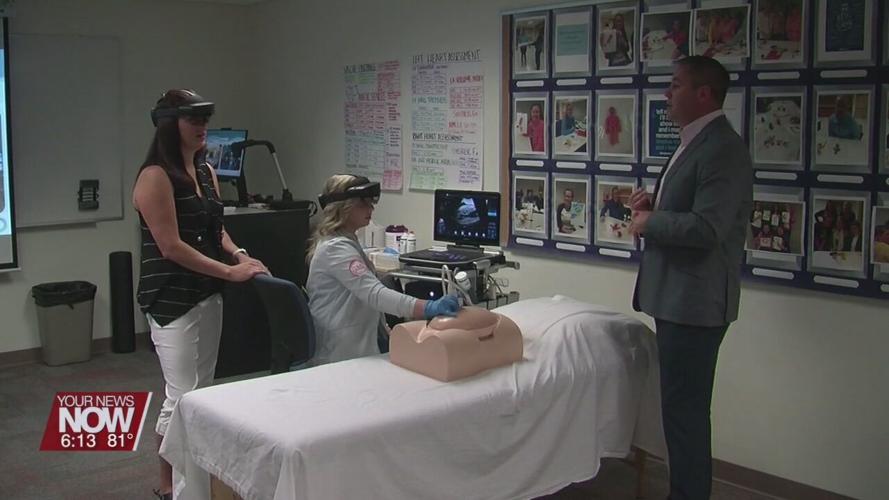
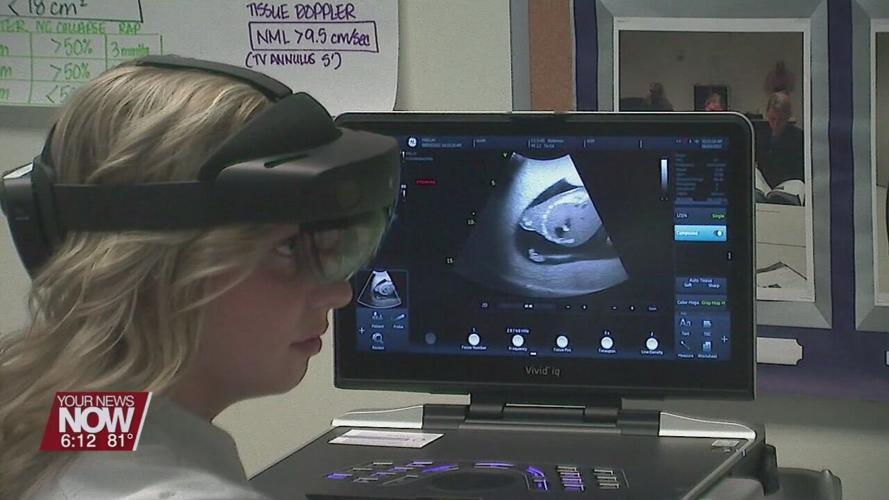


The University of Findlay is the first campus in the nation to train on new cutting-edge technology to perform ultrasounds and will help refine it to make it better in the future.

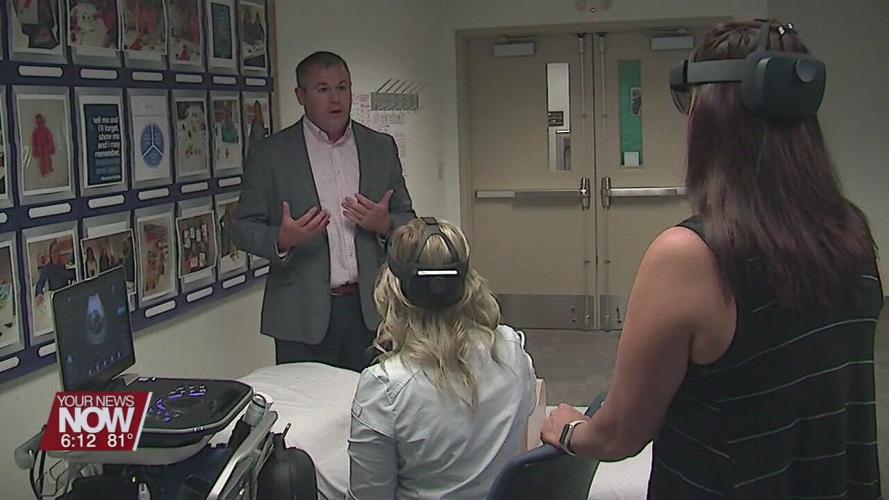
“What you are seeing is one of the first technologies that's ever been released using augmented reality or smart glasses that are brought into the medical setting,” says John Black, CCO, MediView XR, Inc. “So, this is one of the first devices in the United States that has cleared the FDA registration process and is now actually being deployed out in a clinical environment.”

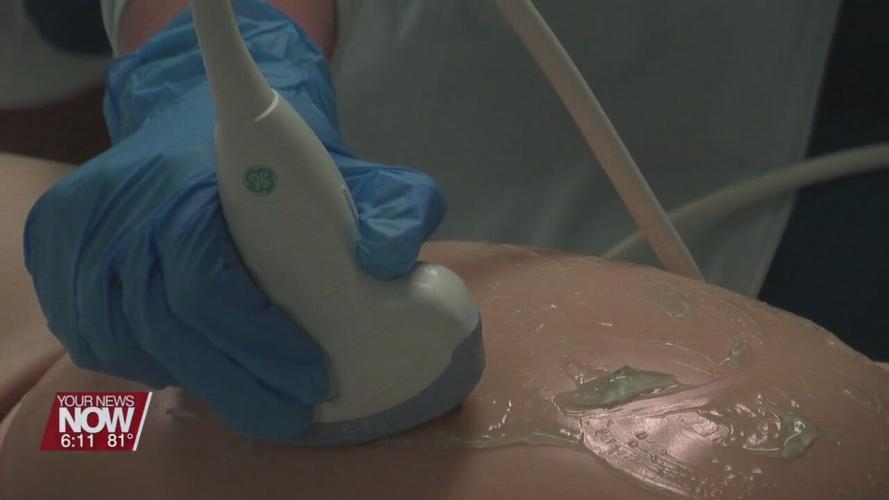
The augmented reality technology from MediView XR, Inc. puts the medical sonographers in line with the patient while they are performing a procedure, instead of looking off to the side looking at a screen, risking injury to themselves.

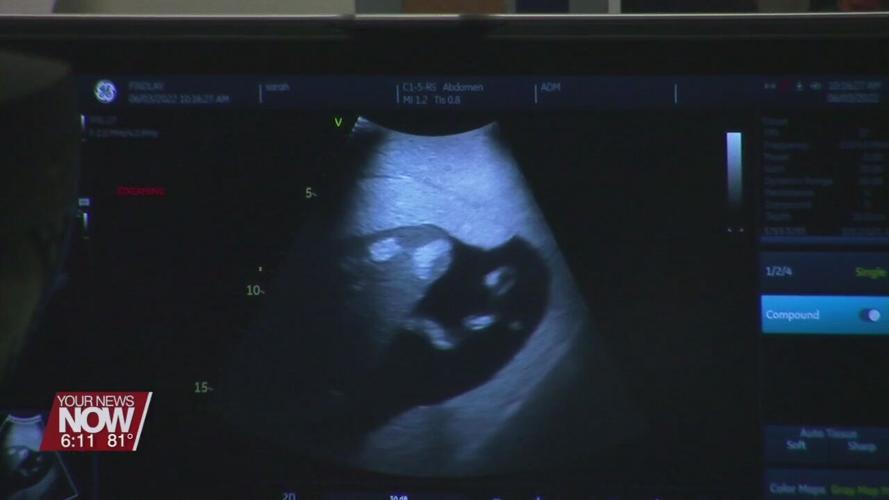
“When we are scanning sometimes, we are put in different position and we can hurt our shoulders, our necks, and things like that,” says Sarah Niese, Instructor of Teaching and Clinical Coordinator in the Echocardiography Program, University of Findlay. “So now when this technology is in our field of view we can see our picture here versus maybe turning and looking away from our patient. So we can put our screen right at our patient now.”

“There is a massive economic burden due to ergonomic injury in the sonography community, in excess of $100 billion a year,” adds Black. “So, the ability to refine ergonomics, but also turn their attention towards the patient. Monitors are great, but it is not the only source of information. In a high information environment, like the patient, being able to orient towards them, have a deeper interaction with them is very important.”
This will allow the students to leave the university and go straight to the clinical setting with the training on the latest technology. The work being done at the university also helps set standards that will improve patient care.
“We (MediView XR, Inc.) are partnering with the University of Findlay starting clinical research to prove that we can get better first needle pass accuracy. That the natural alignment of senses are available with augmented reality, can actually make patients more comfortable and improve outcomes,” says Black.
“Just to have this opportunity to be known as the first school to get to do this, is really exciting,” adds Niese. “I think our students are really excited to start working with it as well.”
The summer sonography class will be the first ones to train with the MediView augmented reality technology.



