

It’s one of the few programs of its kind to prepare kids for what they’ll experience while visiting an adult hospital.
COLUMBUS, OH (OSU) - When someone is seriously or terminally ill in the hospital, having their loved ones by their side is oftentimes the best comfort. But seeing someone they love under those circumstances can be extremely difficult and traumatic for a child, and many families struggle with whether they should allow their kids to visit and how to tell them what is happening. Barb Consiglio has more on a new program that takes the burden off of families and helps them navigate these sensitive moments with their children.

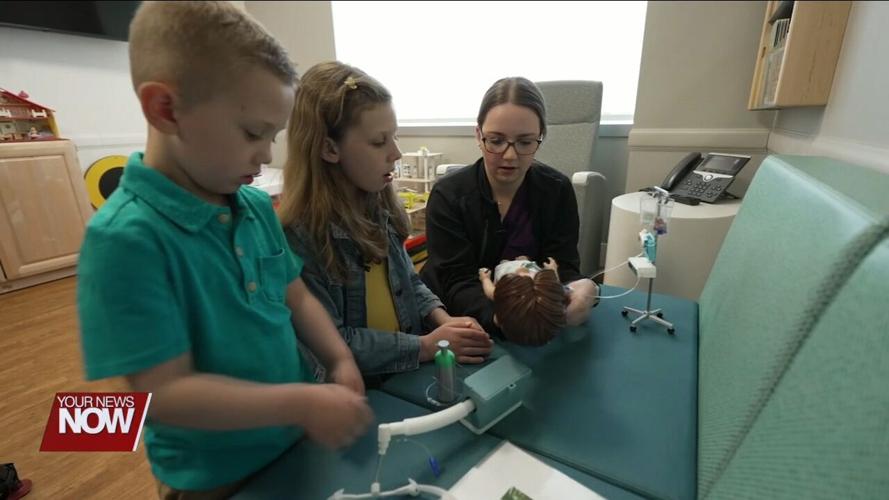
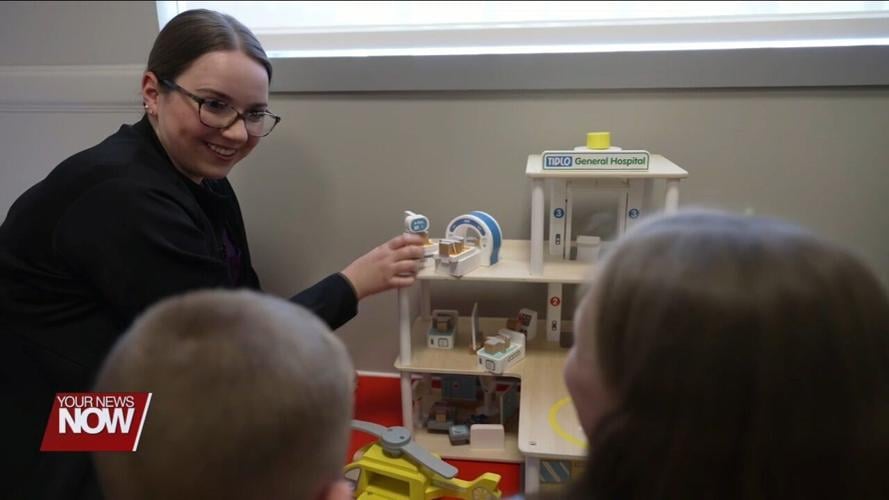
They help to explain their loved one’s diagnosis in terms kids understand, which usually involves play.
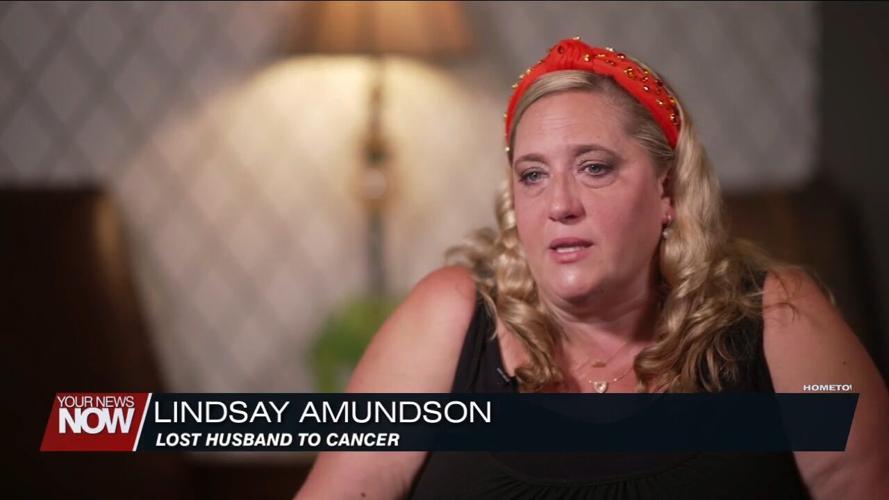
When Lindsay Amundson learned her husband’s cancer was terminal, her first thoughts were of their four-year-old, Benny.
“That was my main concern, was ‘What am I going to tell my son?’" questioned Lindsay Amundson, who lost her husband to cancer.

Lindsay Amundson, who lost her husband to cancer.
That’s when certified child life specialists at the Ohio State University Comprehensive Cancer Center—James Cancer Hospital and Solove Research Institute stepped in to help.
It’s one of the few programs of its kind to prepare kids for what they’ll experience while visiting an adult hospital.

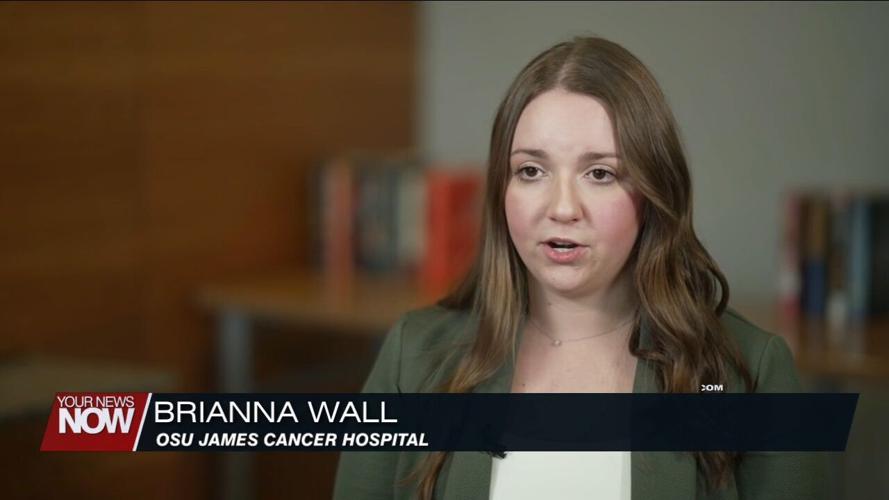
Brianna Wall, The Ohio State University Comprehensive Cancer Center – Arthur G. James Cancer Hospital and Richard J. Solove Research Institute.
“A child is maybe coming to the hospital here to visit their person, and they've never been to a hospital before,” explained Brianna Wall, The Ohio State University Comprehensive Cancer Center – Arthur G. James Cancer Hospital and Richard J. Solove Research Institute.
They help to explain their loved one’s diagnosis in terms kids understand, which usually involves play.
“We will use different dolls, sample medical equipment to allow children to manipulate and explore, and ask questions,” said Wall.

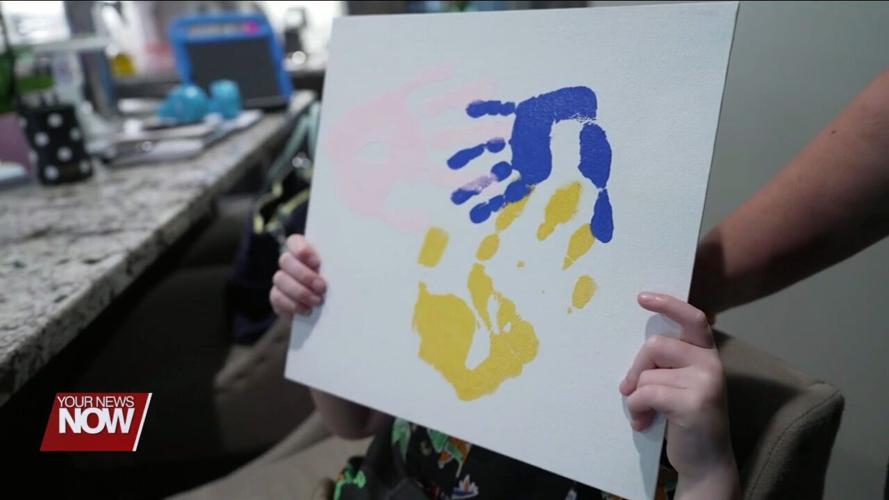
For Benny, it was creating handprint art with his dad.
The experience is personalized, sometimes with things like matching stuffed animals to hold close while their loved one is away or with storybooks to show kids how doctors are caring for them.
“We individualize it to be very specific to the patient, to the family,” stated Wall.
For Benny, it was creating handprint art with his dad.
“And then whose hand is that?” asked Amundson.
“Daddy’s,” responded Benny Amundson.
A positive memory he can carry with him forever.
“It was a lovely way to say goodbye. And I think he properly got to say goodbye to his dad,” said Amundson.
Press Release written by The Ohio State University Comprehensive Cancer Center – Arthur G. James Cancer Hospital and Richard J. Solove Research Institute: COLUMBUS, Ohio – When someone is diagnosed with cancer, their first thought is often not of themselves – but how to tell their loved ones about their diagnosis. This is especially the case for parents or grandparents of young children, for which the hospital can be an especially scary place to visit. The Ohio State University Comprehensive Cancer Center – Arthur G. James Cancer Hospital and Richard J. Solove Research Institute (OSUCCC – James) is among just a handful of hospitals in the country to offer the certified child life specialists to support families experiencing a cancer diagnosis and prepare kids for what they will experience when visiting their loved one in an adult hospital setting.
Director of Survivorship in Cancer Support Services Denise Schimming says when working with patients, their team recognized how important it was to offer this full spectrum of support to families and launched the Child Life Services program in the fall 2023 in partnership with Nationwide Children’s Hospital. Since then, the team has helped dozens of families navigate the physical and emotional transitions associated with navigating a cancer diagnosis and treatment process.
“Traditionally, certified child life specialists are utilized in children's hospital settings, but we saw powerful potential for these specially trained in an adult care setting to help their children and grandchildren cope with medical illnesses and changes,” said Schimming. “We see patients along their entire cancer trajectory and patients were consistently talking more about their families’ needs than their own. So we went back to the table and thought: how do we really support our patients and their families through their cancer treatment? Adding this level of support for the children was a clear answer.”
Certified child life specialists are trained professionals with expertise in helping children and their families cope with medical illness. These professionals help explain a loved one’s diagnosis in terms kids will understand. This often involves the use play-based strategies to prepare children for what they will experience in the hospital. This could involve dolls with sample medical equipment to allow the children to manipulate, explore and ask questions or matching stuffed animals to hold close while there loved one is away or storybooks to show kids how doctors are caring for their loved one.
“A child may be coming to the hospital to visit their person, and they've never been to a hospital before. That can be an overwhelming, scary environment for adults – imagine how that might feel to
a young child with the all different sounds and smells and medical equipment. We work with each family to personalize how we support the family – before, during and after visits to the hospital and throughout the care journey. Sadly, this also can involve saying goodbye to loved ones. We are here for the entire journey to help remove the burden of how and when to do that from the family so they feel supported and less alone in the process,” said Brianna Wall, a child life specialist with the OSUCCC – James team.
To learn more about OSUCCC – James Child Life Services and other caregiver and survivor support, visit cancer.osu.edu.



