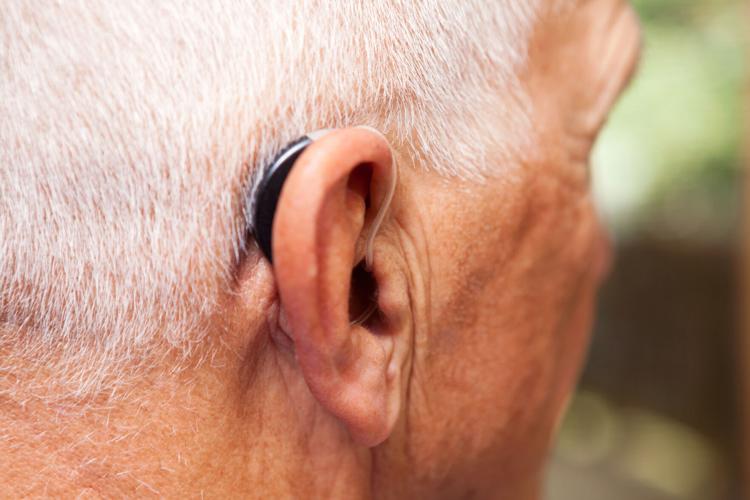

Initially, it may only seem like a moderate inconvenience—the television needs to be turned up a little louder or the occasional bits of conversation need to be repeated. Perhaps listening takes a little more concentration than it used to. It’s just a part of getting older, right? Possibly, but hearing loss can also contribute to larger problems down the road.
Scientists agree that untreated hearing loss, even to a moderate degree, can be a risk factor for the development of cognitive issues like dementia. Hearing loss in and of itself is not a direct sign or cause of cognitive decline, but there’s a clear link between hearing loss and conditions like dementia.
Researchers have found that untreated hearing loss is one of the most modifiable factors in the progression of cognitive difficulties in older adults. “The thinking behind that is, when we don’t have adequate hearing, we’re not getting as much stimulus in those areas of the brain,” says Vanessa Lee, president, and audiologist at Auglaize Audiology in Wapakoneta. “The way I explain this to patients is, it’s like a walk in the woods—if it’s a path you walk frequently, then it’s more clear. But if it’s a path you walk infrequently, it becomes very grown over, and it’s not easy to pass through. That’s the thought process around how hearing loss contributes to the onset and continued progression of dementia.”
Hearing loss is hardly a benign condition, and it’s also one of the most common conditions affecting older adults. According to the National Institute on Aging, approximately one in three people ages 65 to 74 and nearly one in two people age 75 and older suffer some degree of hearing loss. Research at Johns Hopkins funded by the NIA discovered that even mild hearing loss was associated with a two-fold risk increase in the development of cognitive problems like dementia, with moderate hearing loss carrying a three-fold risk increase and severe hearing loss a five-fold risk increase.
A recent Columbia University study found that even the earliest stage of hearing loss is linked to cognitive decline. Physicians have typically used 25 decibels—about the loudness of a whisper—to define the border between normal hearing and mild hearing loss in adults. But the Columbia team found that cognitive ability could erode with every 10-decibel loss of hearing, with the largest decrease in cognitive ability occurring in those whose hearing was just starting to become impaired.
It’s clear that hearing loss, even in its earliest stages, can affect one’s lifestyle greatly. And yet, only 14 percent of adults with hearing loss in the United States wear hearing aids, according to the Columbia University study.
It can often take up to a decade of hearing loss before older adults finally take action to address the problem. “The quicker we can act on it, the better,” says Lee, an audiologist with nearly three decades of experience. “The time between when a person starts to recognize they have hearing loss and when they do something about it is about seven to 10 years, which is a long time. We want to encourage people to take action earlier because the benefits are so much greater.”
Why do people wait so long to address hearing loss? Because there’s an unfortunate stigma around hearing aids that don’t exist with other treatments like eyeglasses. “But when it comes to hearing loss, for some reason, everyone thinks it’s only for old people,” Lee says. “But I treat children with hearing loss, so it’s not something just for old people. And the technology in hearing aids has become so savvy, you can do wonderful things with them.”

Lee says her husband, who suffers from mild hearing loss, uses his hearing aids to connect to his phone or listen to audiobooks and music, on top of using them to hear better overall. Hearing aids are often now Bluetooth compatible, opening them to a range of convenient uses. Hearing aids have also become far more low-profile, with some fitting fully within or just outside the ear canal, making them nearly invisible to onlookers.
Early treatment is crucial, given that hearing loss has also been linked to social isolation and depression in addition to cognitive decline and dementia. People who struggle to hear can feel embarrassed or weary of keeping up with conversation and can end up avoiding social engagements entirely. Social circles get smaller and the amount of stimulus the brain receives continues to decline. Treatment by an audiologist can help clear that pathway and slow or stop the progression of hearing loss that can contribute to more serious problems later on.
“Dementia is one of the most feared disease processes people have as they get older. And I know it's something that I fear for myself,” Lee says. “So I just want to encourage people to do all they can in their power to help prevent that. And addressing their hearing is a big one that they can do. It's painless, and it brings such great rewards.”
Have you experienced hearing loss, or are you interested in getting your hearing tested? For more information, contact Auglaize Audiology at (419) 739-7575 or stop by their office at 208 Defiance St. in Wapakoneta. For more information, visit their website at AuglaizeAudiology.com.



