

COLUMBUS, OH (WEXNER MEDICAL CENTER) - Paralysis, multiple sclerosis, and ALS. These conditions impact millions of lives with little hope for improvement. But that may not always be the case. Barb Consiglio has the details on scientific breakthroughs that may one day make these conditions treatable and bring hope for recovery to those diagnosed with a wide range of currently incurable diseases and injuries.

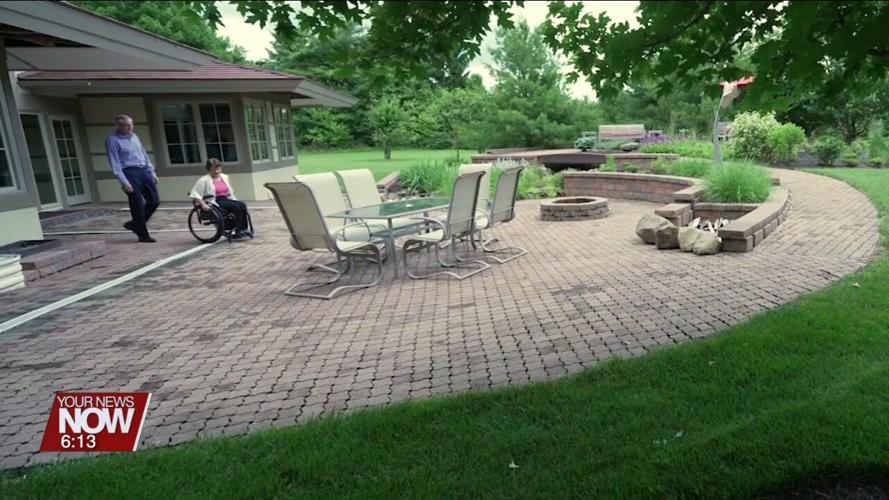
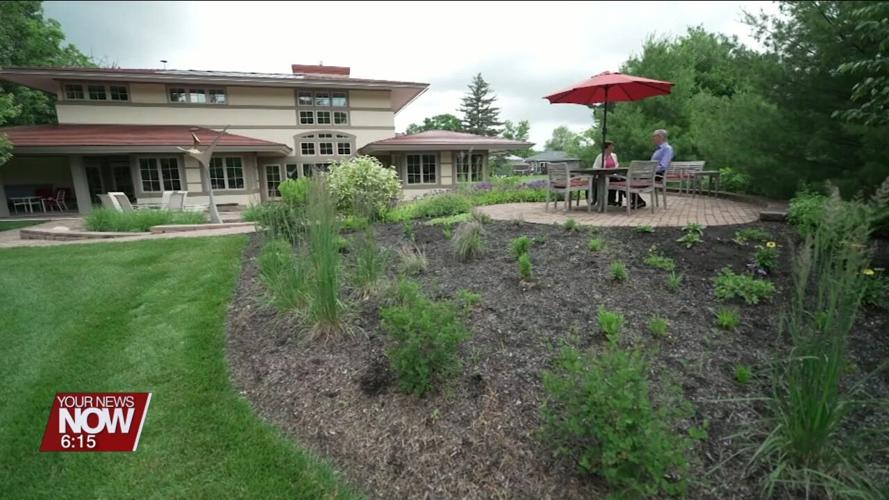
“My husband Mark and I were celebrating our third wedding anniversary," said Rosemarie Rossetti, who suffered a spinal cord injury.
One minute Rosemarie Rossetti was on a bike ride with her husband, and the next she was paralyzed by a falling tree that injured her spinal cord.
“And I looked up, and I just said, ‘I can't move my legs," added Rossetti.
“Permanent disability results from the fact that nerve cells either die or the nerve fibers that they use to transmit their signals become damaged and they do not regrow," stated Benjamin Segal, MD, at the Ohio State Wexner Medical Center.

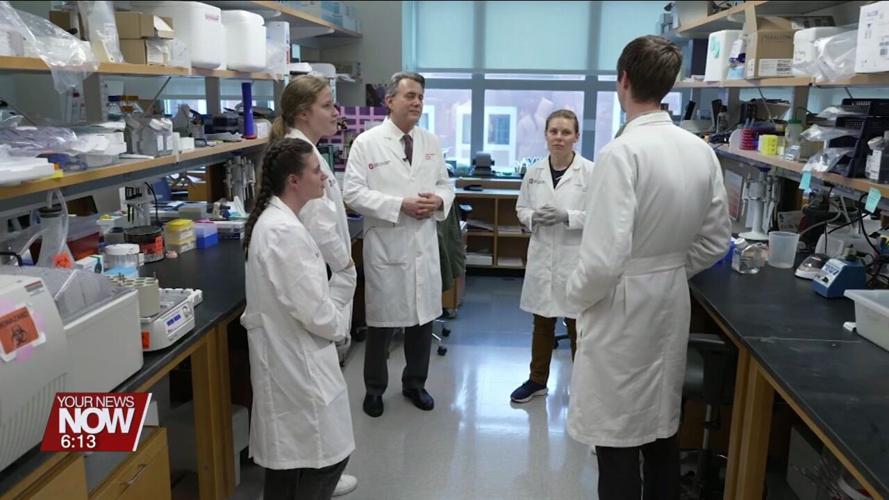
It’s the same cause of disability that affects millions—not only those with spinal cord injuries like Rosemarie’s but also those with nerve damage caused by a stroke or progressive diseases like multiple sclerosis and ALS. They’re conditions long thought to be permanent, but Doctor Benjamin Segal and his research team at the Ohio State University Wexner Medical Center are working to change that.
“We are now becoming aware of a reparative arm of the immune system that can arise naturally to some extent in the aftermath of injury,” said Dr. Segal.
A few years ago, they discovered a new type of immune cell in mice that triggers the repair and regrowth of nerve fibers.
“They also gain the ability to produce factors that protect nerves that are damaged and help them to survive, prevent them from actually dying,” explained Dr. Segal.

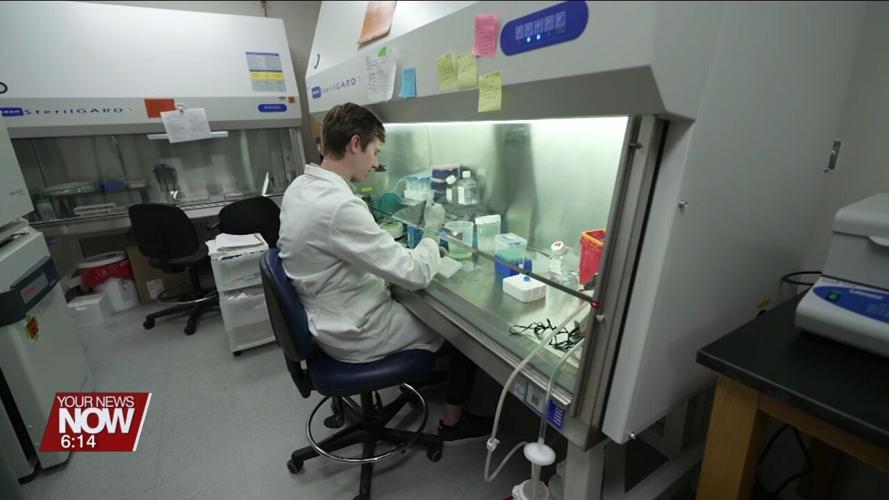
In their latest research, they’ve not only confirmed that this type of healing cell does, in fact, exist within the bone marrow of humans, but they were able to successfully grow new healthy nerve fibers by removing these cells and stimulating them in the lab.
“The ultimate goal is to use these cells in order to actually reverse damage, in order to restore lost neurological functions,” said Dr. Segal.
A complete game-changer for those living with these devastating conditions.
“That would be a dream come true to say, all right, you're no longer paralyzed,” added Dr. Segal.
Researchers are now working on exactly how new cell therapies should be given and how this approach to directing a patient’s own immune cells to the site of injury or disease may reverse the damage and restore function. This research is also promising to halt or slow the progression of diseases like Alzheimer’s and Parkinson’s by protecting nerve fibers in the brain from further damage.
New research reveals a healing immune cell that has the potential to stimulate nerve fiber regrowth in mice and humans
COLUMBUS, Ohio (The Ohio State University Wexner Medical Center) – In a new study, neuroscience researchers at The Ohio State University have discovered a special type of human white blood cell that has the potential to regrow nerve fibers. The study findings, published in the journal Nature Immunology, mark a significant leap forward in medical science.
“Dying nerve cells are typically not replaced, and damaged nerve fibers do not normally regrow, leading to permanent neurological disabilities,” said corresponding and senior author Benjamin Segal, MD, professor and chair of the department of neurology at The Ohio State University Wexner Medical Center and College of Medicine.
Segal's team found that bone marrow cells can be transformed into powerful healing agents. By stimulating these cells with specific molecules in the lab, the team was able to turn them into pro-regenerative cells that can help damaged nerve cells survive and regrow.
“Our ultimate goal is to develop treatments using these special cells, to reverse damage in the optic nerve, brain, and spinal cord, thereby restoring lost neurological functions,” said Segal, who is also director of Ohio State’s Neuroscience Research Institute.
Nerve damage from spinal cord, optic nerve or brain injuries, and degenerative neurological diseases such as ALS, Alzheimer’s and multiple sclerosis, has long been believed to be permanent. However, four years ago, Segal's team made a breakthrough in mice, sparking hope for millions affected by these conditions.
“Our new study shows that patients’ own cells can likely be used to deliver safe and effective treatments for these devastating conditions,” said co-first author Andrew Jerome, PhD, a member of Segal’s research team.
In their recent study, the team generated pro-regenerative cells from the bone marrow of eight different human donors. Remarkably, cells from all eight donors successfully drove human nerve cells to regenerate nerve fibers. These cells even tripled the survival rate of stressed nerve cells. This suggests they can help slow or prevent progression of degenerative neurological conditions, as well as reverse injury and restore function.
“With the success of these lab experiments, our focus now shifts to bringing these new cell therapy treatments to the patients who need them. We believe these cells can be extracted from a patient, stimulated and grown to large numbers in the lab and reinfused at the site of injury or disease to regrow brain and spinal nerve fibers,” said co-first author Andrew Sas, MD, PhD, assistant professor of neurology at Ohio State.
Segal’s team continues to push these advancements forward. The next steps are to develop the most efficient methods of growing and delivering these cells so clinical trials can begin. Treatments that bring improvements for patients that once seemed impossible are now on the horizon, Segal said.



