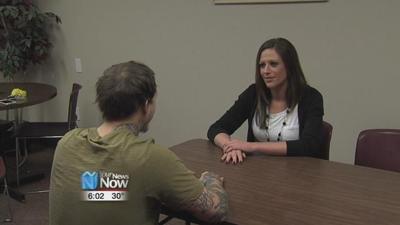
From addiction to salvation, there is a light at the end of the tunnel for heroin addicts. One woman shares her story of getting clean and giving back.
Kendra’s story starts like many others. “I started out with you know like smoking weed and drinking and that kind of progressed into doing pain pills and then from the pain pills I went to heroin because it was cheaper,” said Kendra Dysert.
But her story has a happy ending. Kendra landed prison after an overdose, and made a decision that changed her life. “I remember the exact day I was sitting out in the yard by myself reading a book and I was just kind of looking around and couldn’t believe that this is what my life had come to,” said Kendra, “And I made a promise to myself that I would not go back there, you know I was done with it.”
She immediately checked in to Coleman Professional Services and learned how other addicts who got clean are recruited as recovery coaches. “We started identifying them to say look I think you can be really helpful in our efforts to help other people in recovery, now that was like giving these individuals a lottery ticket,” said Michael Schoenhofer, Executive Director of the Mental Health and Recovery Services Board. Now Kendra gets paid to help people just like her get their lives back. “I feel like it helps people be more comfortable around me you know what I mean they know I’m not going to judge them for some of the things they’ve done because they know I’ve done it as well and it also helps people realize that recovery is possible, they can look and be like if she did it I can do it too,” said Kendra.
These coaches are part of many ways to extend the war on drugs and mental health into the community. “With our recovery coaches and Coleman Behavioral health and UMADAOP when they have all these things in place they can refer back to us so they’re family and friends, the folks that they’re working with, can get this information especially Mental Health First Aid to understand oh if I see this coming down the path this is who I need to call,” said Donna Dickman, Director of the Partnership for Violence Free Families.
From prevention to treatment, Mental Health & Recovery Services offers programs for each step of the way. “Right now we have over 400 people in active recovery for an opiate addiction which is kind of the worst addiction there is, and many people get their jobs back, get their families back, there really is hope," said Schoenhofer.
“Just take it day by day, and if you can make it through one day, and lay your head down at night knowing that you didn’t use or get high or anything that should just give you that much more confidence to do it again the next day,” said Kendra.
The Partnership for Violence Free Families and the Mental Health and Recovery Services offer programs like GRASSP, Mental Health First Aid, Refuse, Remove, Reasons, Lifelines, and We Care at Work as a means of education, prevention, and awareness for suicide, mental health, drug abuse, and other issues. If you or someone you know needs help you can call the HOPEline at 1-800-567-4673 (HOPE) or text 741741.
The Heroin Task Force meets March 16th at 2:00 PM in the city building.



